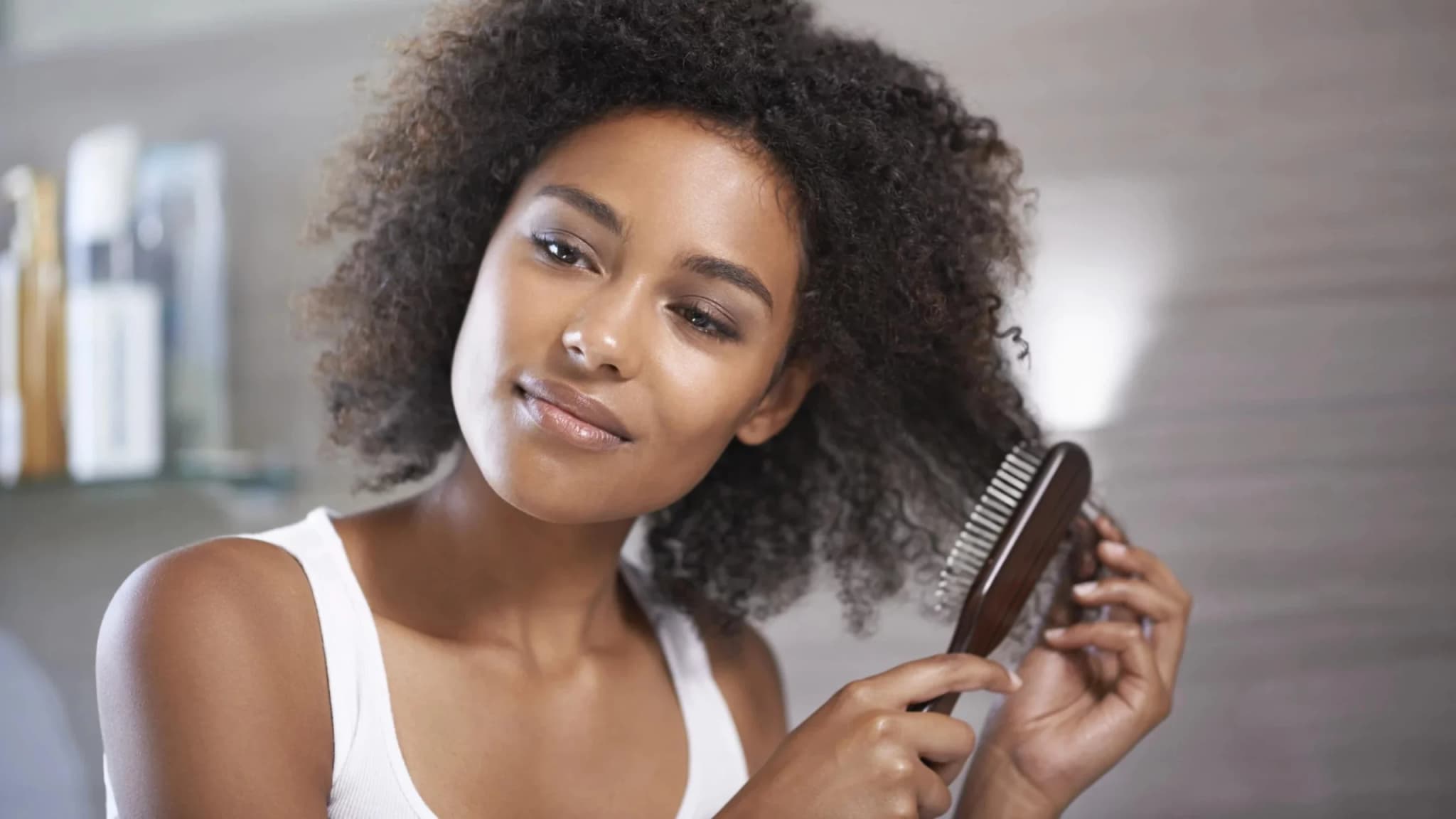
Brushing is the part of curly hair care with the most contradictory advice attached to it — never brush, brush daily, only brush wet, never brush wet. Most of that disagreement is people describing different strokes and calling them the same word.
This is about the stroke: whether the hair is wet or dry when it happens, which direction it runs, how much pressure to use, and how often. It is not a tool roundup and it is not a wash-day routine — the curly hair routine covers the sequence a brush sits inside, and detangling natural hair covers when in that sequence the detangling pass belongs.
Wet or dry?
Wet, with something slippery in it — for detangling. Curly and coily hair has the least give and the most friction when it is dry, so a dry detangling pass is where strands snap. In the shower with conditioner in, the hair is slippery, the knot loosens rather than resists, and what comes loose rinses out instead of re-tangling into the section below.
Dry, gently and rarely — for volume or a stretched style. This is the other thing people mean by brushing, and it is a different job. It costs definition, so it is worth it when you want a stretched or a fuller look and not otherwise.
The moment to avoid is the middle: hair that has been towelled to damp has lost most of its slip and has not yet set into its pattern. That is the worst of both.
Which direction, and how much pressure
Ends first, then upwards, in short passes.
Start at the last inch or two, clear that, move up an inch, clear that, and keep working towards the roots. A stroke that starts at the scalp and runs the whole length gathers every tangle on the way down and drives them into one dense knot at the ends — which is then the thing that breaks.
Pressure is the other half. If you can feel the brush pulling the hair at the follicle, the stroke is too long or the section is too big. Hold the section above where you are brushing, so the pull stops at your hand rather than at your scalp.
Section, or it will not work
Two or four sections at minimum; more if the hair is dense. Brushing a whole head loose feels faster and takes longer, because you keep re-tangling the part you just cleared.
How much sectioning you need is mostly a question of hair density rather than curl pattern — a fine, low density head can often work in two, a dense one is easier in six.
How often
For detangling: once per wash day, done properly. Not a little every day — frequent light passes add wear without adding anything the hair needed.
For styling: whenever you actually want that look. There is no health reason to brush curls dry on a schedule, and the "hundred strokes a night" advice is inherited from straight hair, where a brush carries scalp oil down a smooth shaft. On a coiled shaft it does not travel that way, so the ritual costs definition and buys very little.
What to use
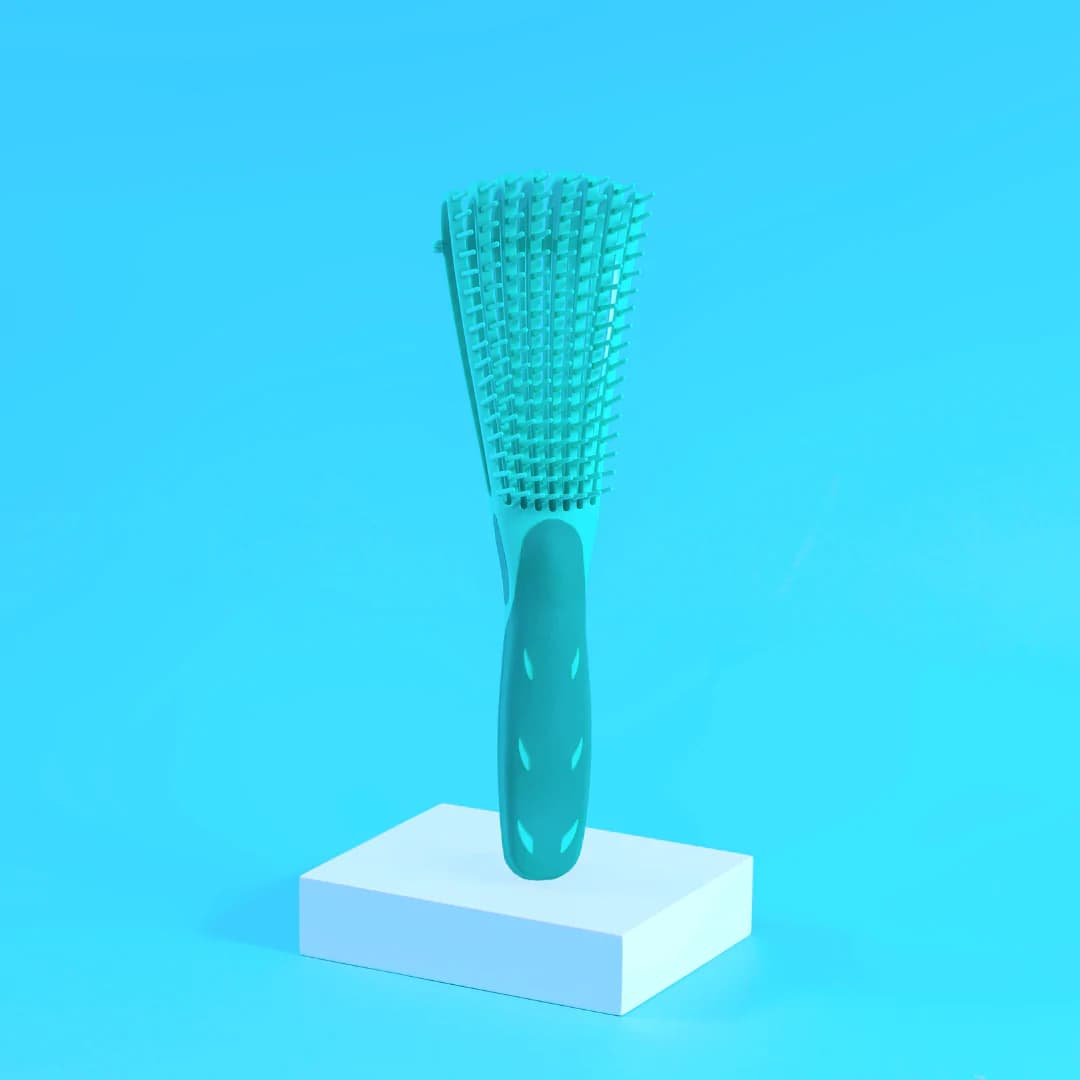
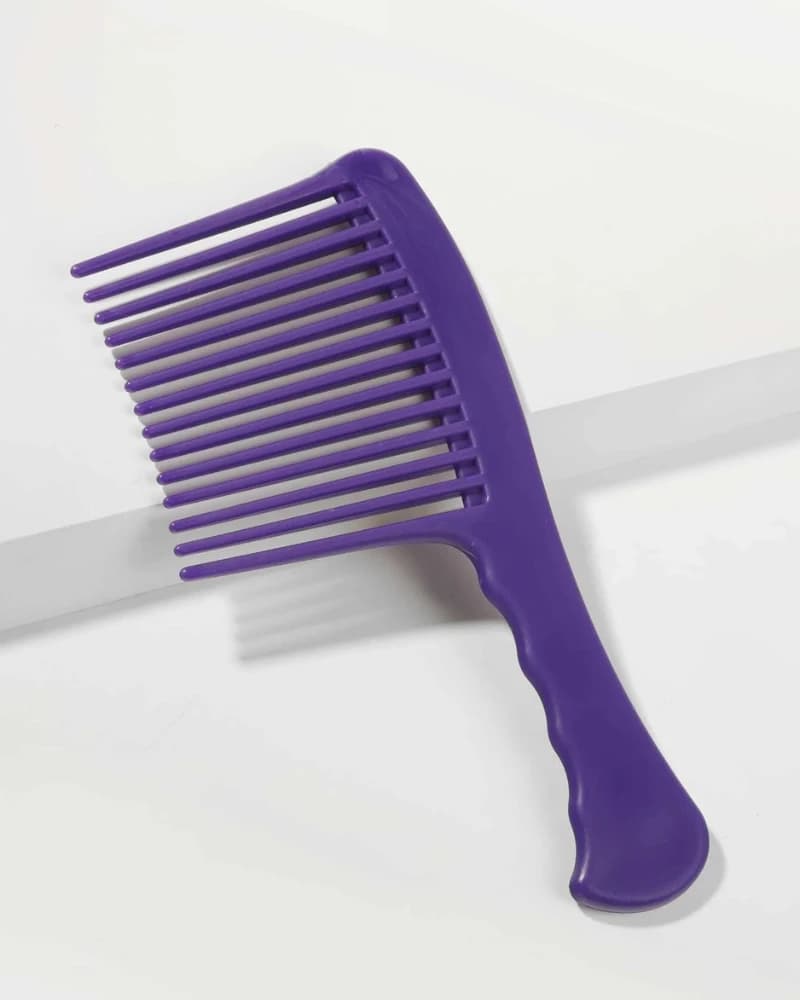
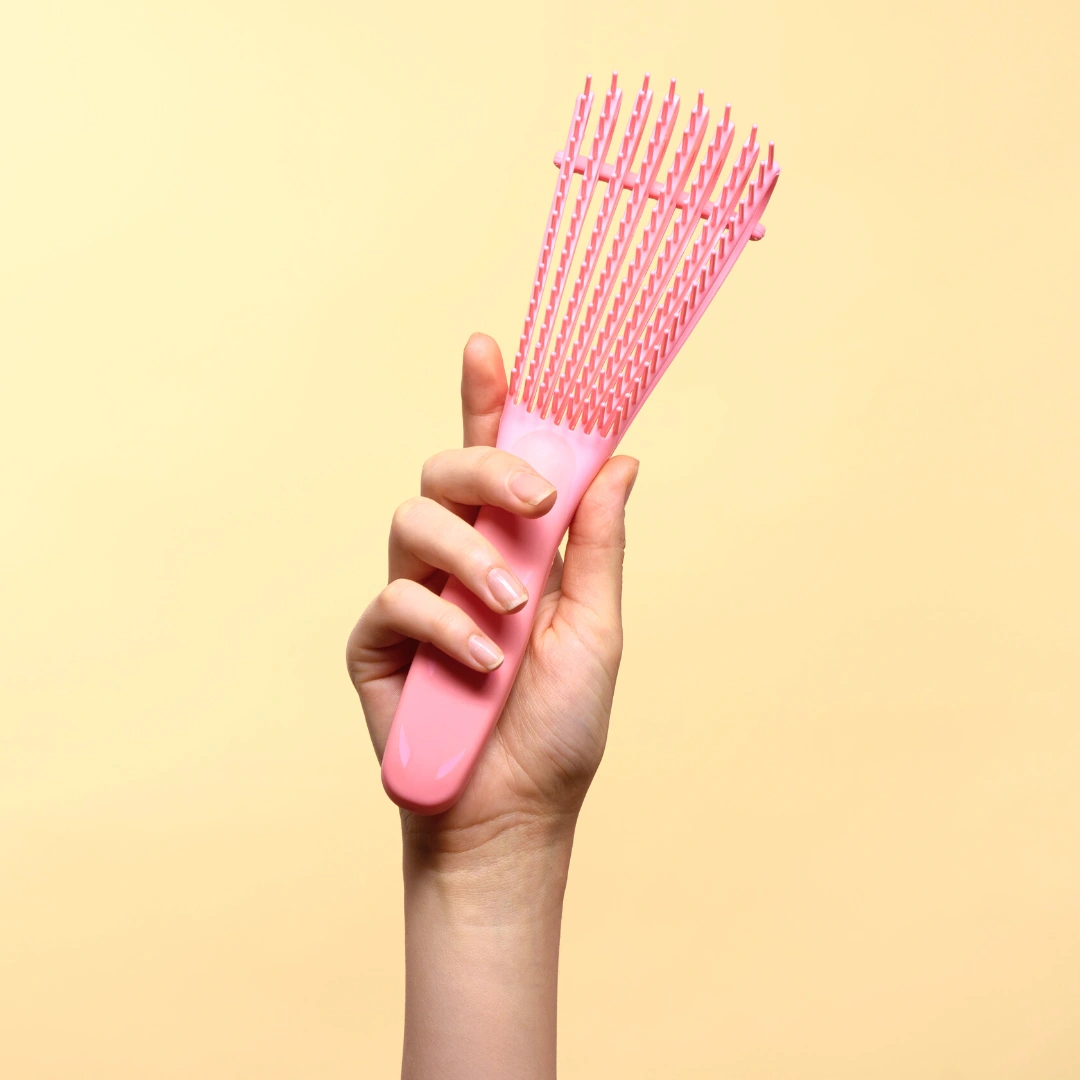
A flexible detangling brush with a long handle, or a wide-tooth comb. The flexibility is the point — a brush whose head gives under load spreads the force instead of concentrating it on whichever strand caught first. Stiff nylon bristles do the opposite.
Fingers are a real option, not a fallback. On tightly coiled hair a first pass with fingers finds a knot before it pulls it, which no tool can do.
When not to brush
- On dry, unprotected hair you care about the definition of. You will get volume and frizz. That is the trade, and it is fine when it is the one you wanted.
- Through a knot that has resisted twice. Add water or conditioner and come back to it. The third pass is the one that breaks it.
- On a scalp that is sore, inflamed or flaking persistently. That is not a brushing problem and nothing here treats it — see a doctor or a trichologist.
Does it change by curl pattern?
The direction and the pressure do not. What changes is how much sectioning and how much slip you need before the stroke is safe: looser patterns tolerate a longer pass, tighter ones need shorter passes and more product.
The tools this guide is written about
Curltastic makes detangling and wash-day tools for textured hair. Browse brushes and combs.