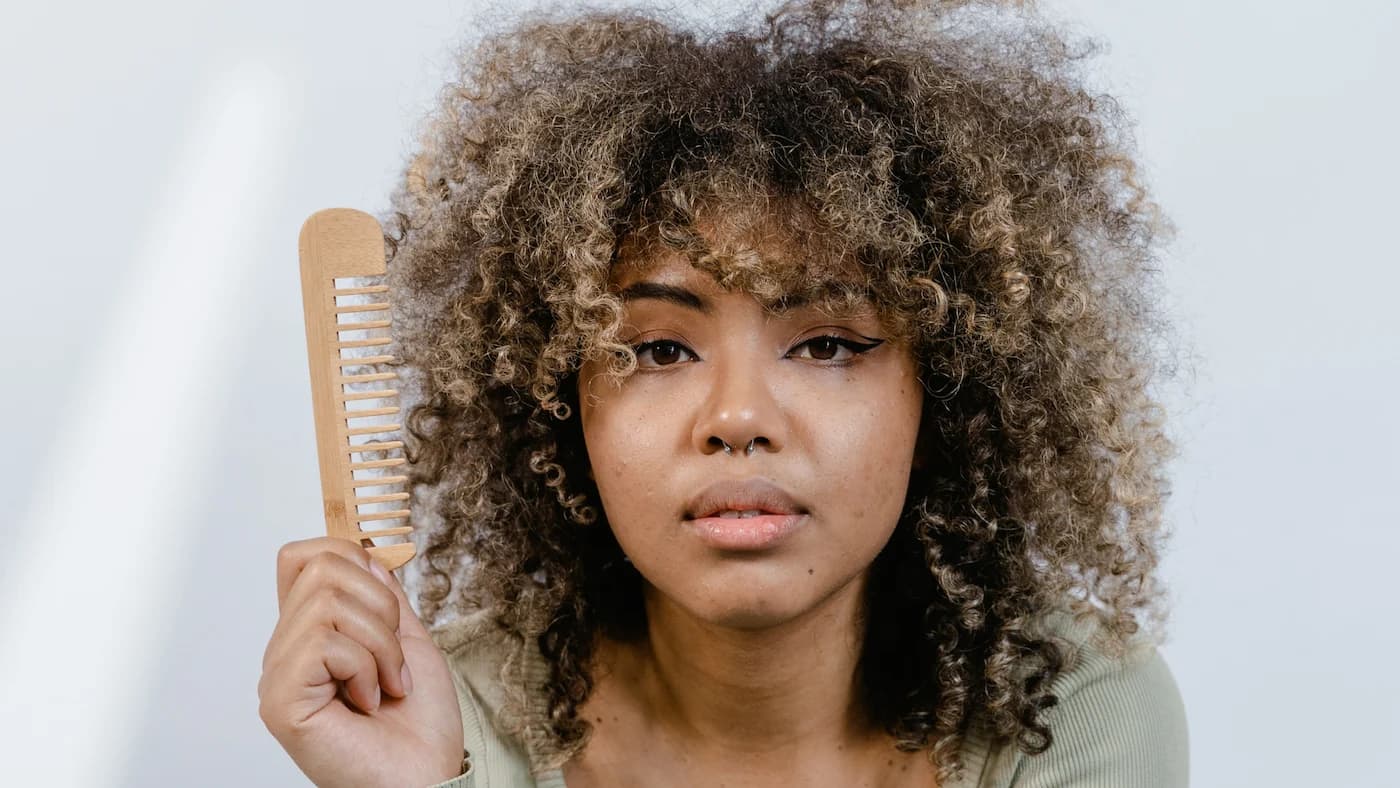
Almost every guide to detangling natural hair answers the same question — how — and almost nobody answers the two that decide whether it goes well: how often, and when. Detangling with the right tool at the wrong moment still breaks hair. Detangling with your fingers at the right moment usually does not.
So this is the timing half. If what you want is the technique, section by section, the curly hair routine covers the whole wash day in order, and how to brush curly hair covers the mechanics of the brush stroke itself.
How often should you detangle natural hair?
Once per wash day, properly — not a little bit every day.
Detangling is not maintenance in the way that moisturising is. Every pass through the hair costs you a small amount of mechanical wear, so the aim is fewer, better passes rather than a daily tidy-up. For most people that lands at once a week; if you wash more often than that, detangle at each wash rather than between them.
Daily detangling is the pattern to be most careful of. It feels productive and it is the fastest route to losing length, because it multiplies the number of times a fragile strand gets pulled without adding anything the hair needed.
The exception is length. Past shoulder length, tangles compound faster than they do on shorter hair, and going a fortnight can turn a twenty-minute session into an hour-long one. If a session is getting longer each time, you are detangling too rarely, not too gently.
When in wash day does it belong?
In the shower, with conditioner in, while the hair is soaked.
There are three moments people choose, and they are not equivalent:
- Dry, before the shower. The worst of the three for most textures. Dry natural hair has the least give and the most friction; this is where snapping happens.
- In the shower, with conditioner in. The best. Hair is at its most slippery, the conditioner is doing the work of loosening the knot rather than your hands, and anything that does come loose rinses away instead of re-tangling.
- After towelling, on damp hair. Workable, and much better than dry, but you have already given up most of the slip that made the previous option safe.
If you like a pre-shampoo step, that is a fourth option and it is a genuine one: an oil or a conditioner worked through before washing loosens the worst of it, so the in-shower pass is shorter. It is not a substitute for the in-shower pass, it is a way of shortening it.
What to detangle with
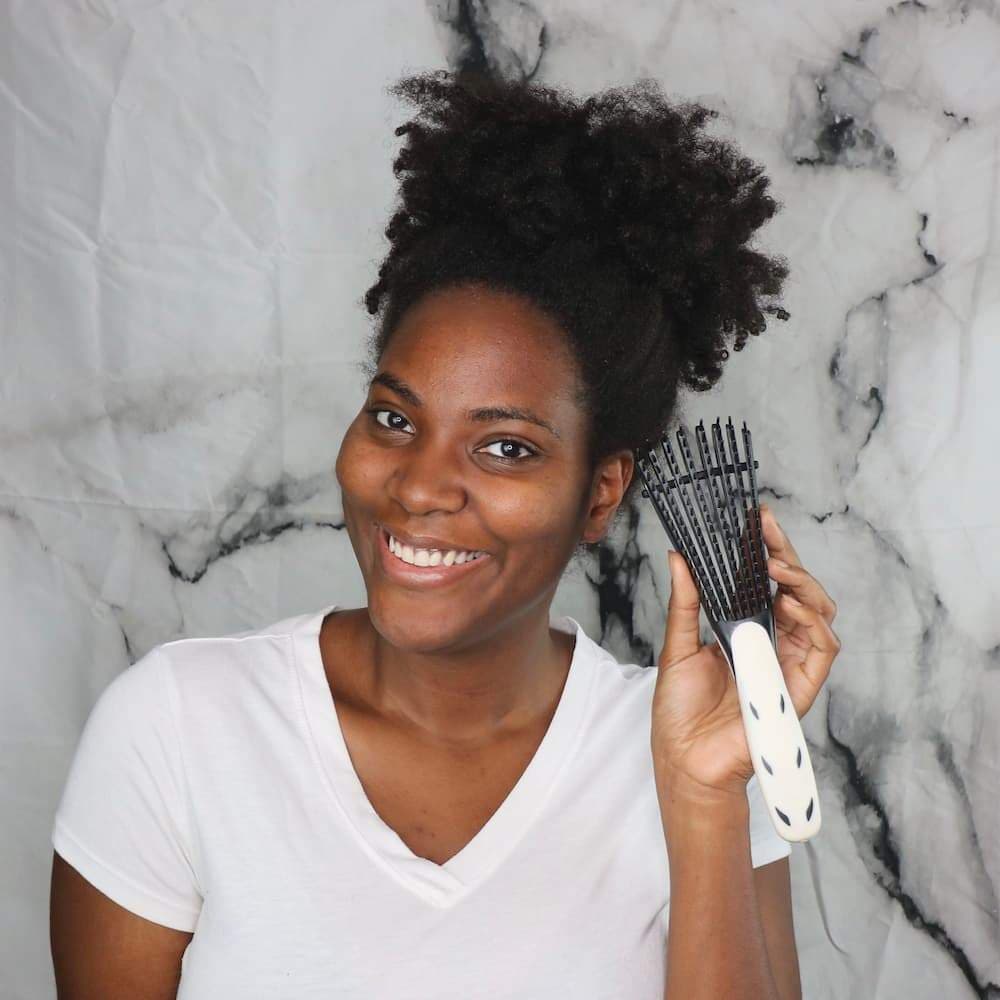
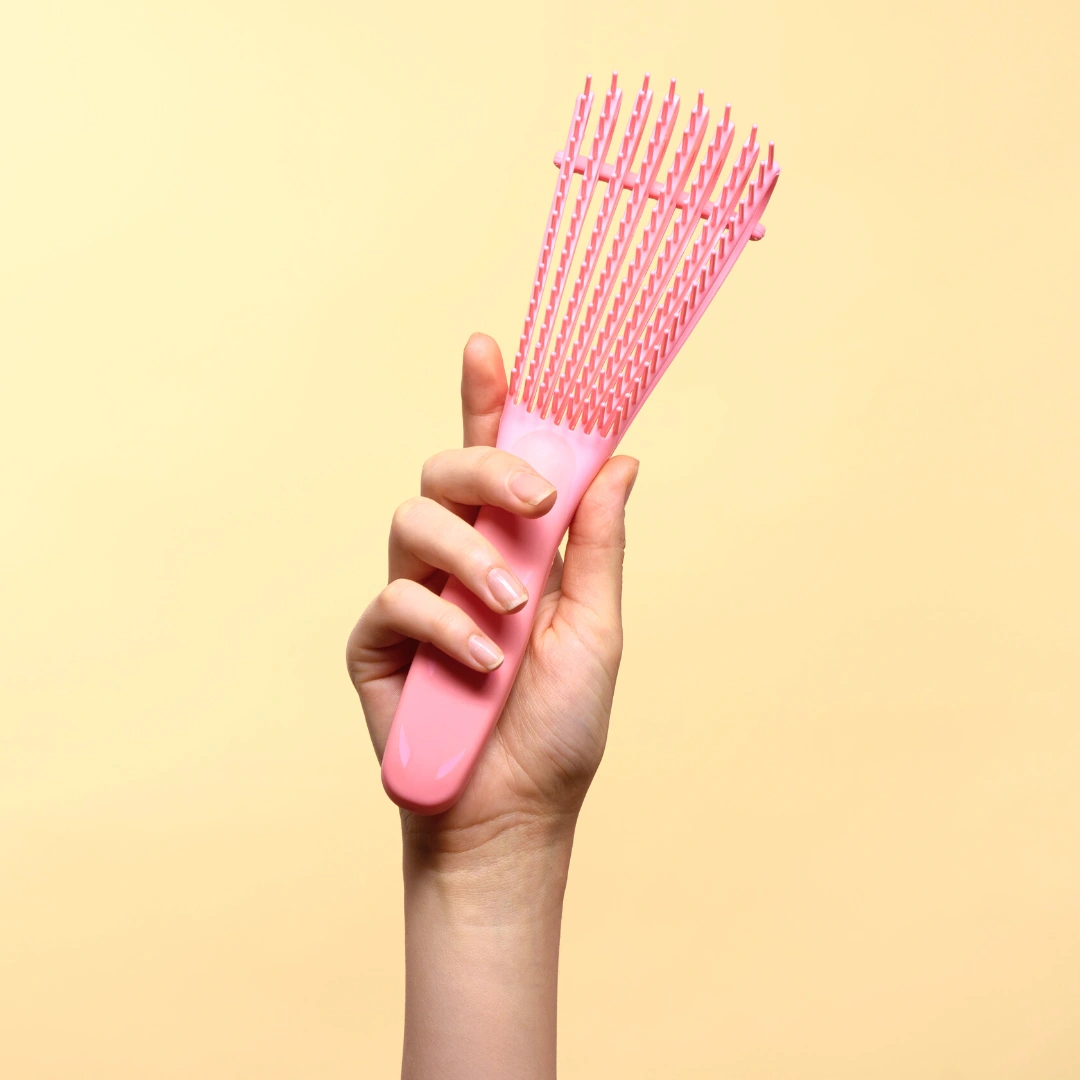
Less than you would think turns on the tool, as long as the timing is right — but a wide-toothed comb or a flexible detangling brush with a long handle beats a stiff nylon-bristle brush at any moment of the day, and the long handle is what lets you reach the back of your own head without twisting the section.
A wide-tooth comb does the same job more slowly and with more feedback, which some people prefer for the first pass through the worst of it. Fingers are a legitimate tool too, and on tightly coiled hair they are often the right first pass: you feel a knot before you pull it.
When a knot will not move
Stop pulling on it. A tangle that resists two gentle passes is not going to give on the third — it is going to break.
Instead: soak that section again, add more conditioner or a slippery oil, leave it a couple of minutes, and come back. Work the knot apart from the bottom edge with your fingers before any tool touches it. This is slow and it is the whole difference between a bad wash day and a fine one.
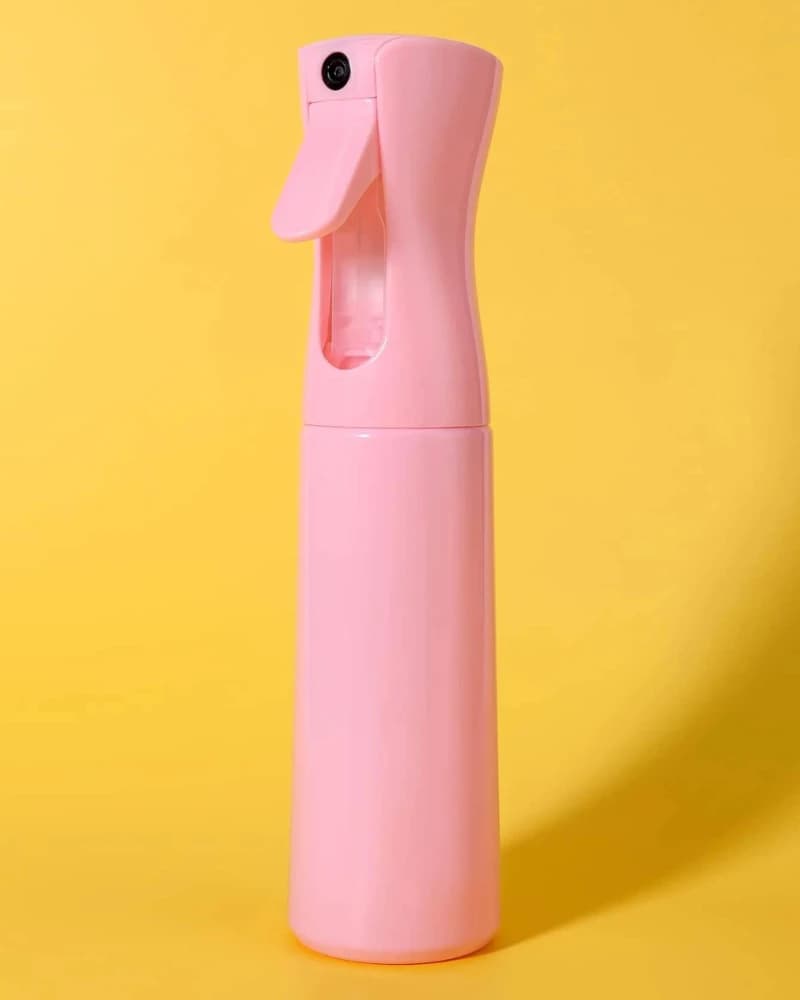
A spray bottle is the practical version of "soak that section again" once you are out of the shower — a mist, not a drench, section by section as you work.
Where this does not apply
If hair is genuinely matted — felted together at the root rather than knotted along the length — none of the above is the answer, and neither is more force. That is a case for a lot of conditioner, a lot of patience over several sessions, and honestly a professional if it covers more than a small area. Detangling a matted section aggressively is how people end up cutting it out.
In short
Detangle once per wash day, in the shower, with conditioner in, from the ends upwards, and stop pulling the moment something resists. The tool matters less than any of that.
The tools this guide is written about
Curltastic makes detangling and wash-day tools for textured hair. Browse brushes and combs — or start with the wash day essentials.