3-in-1 Edge Brush — Comb, Bristle Brush & Steel Pin Tail
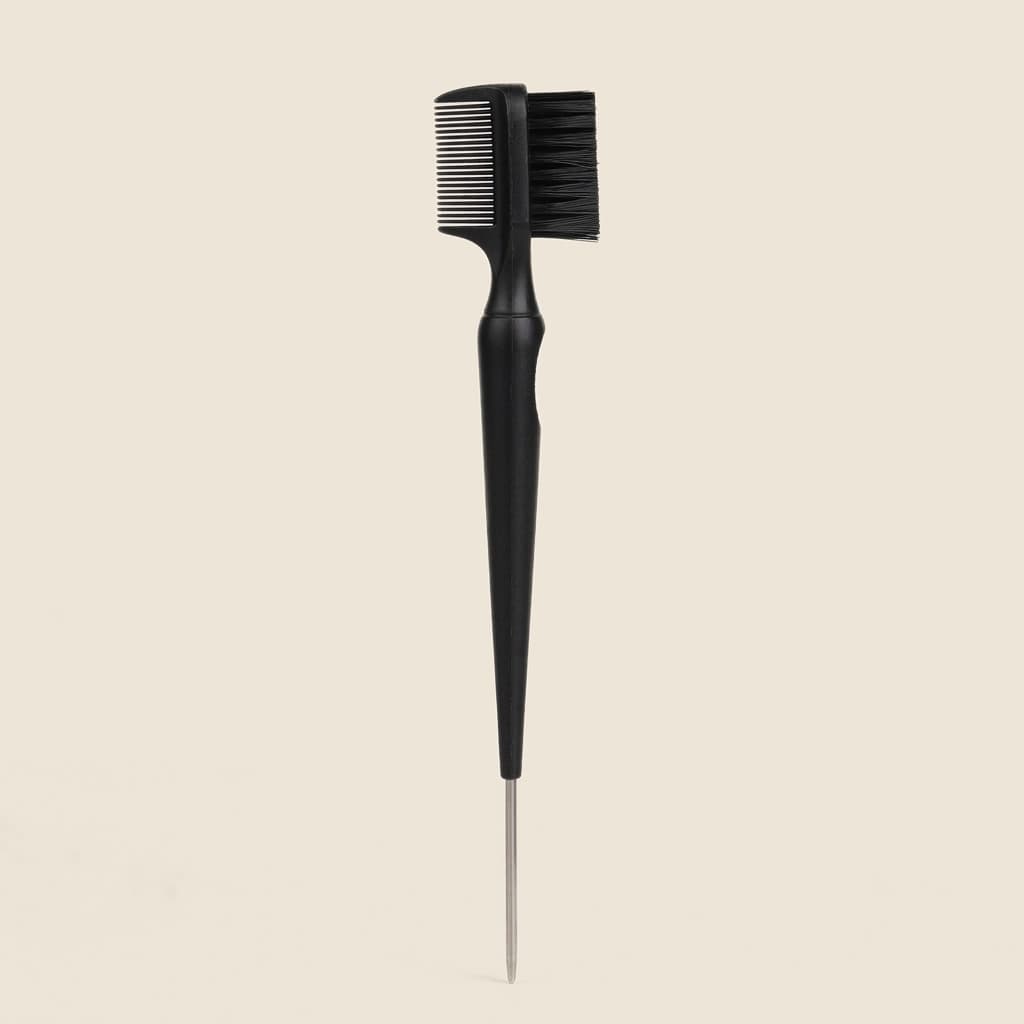
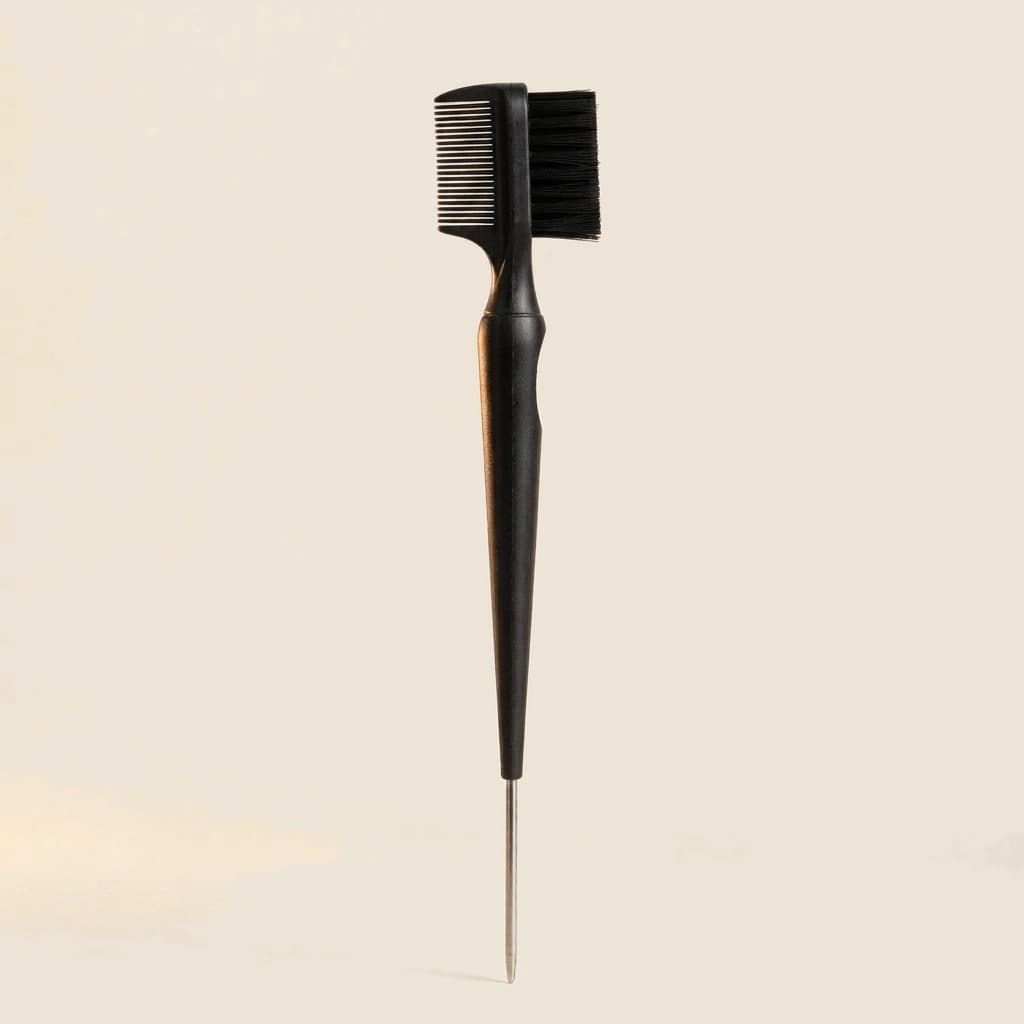
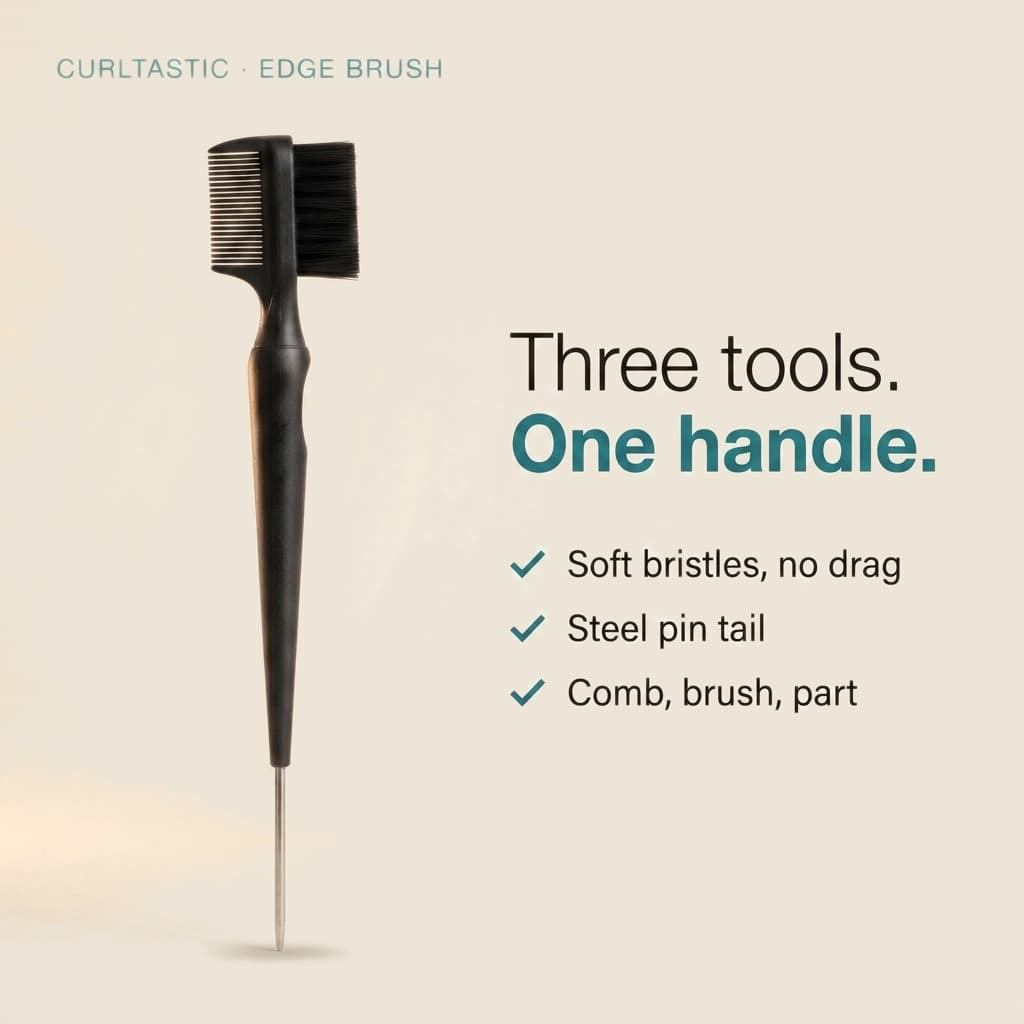
Three tools in one body for laying edges: soft dense bristles, a fine-tooth comb and a steel pin tail.
- Soft dense bristles carry gel, not roots
- Fine-tooth comb draws the swoop
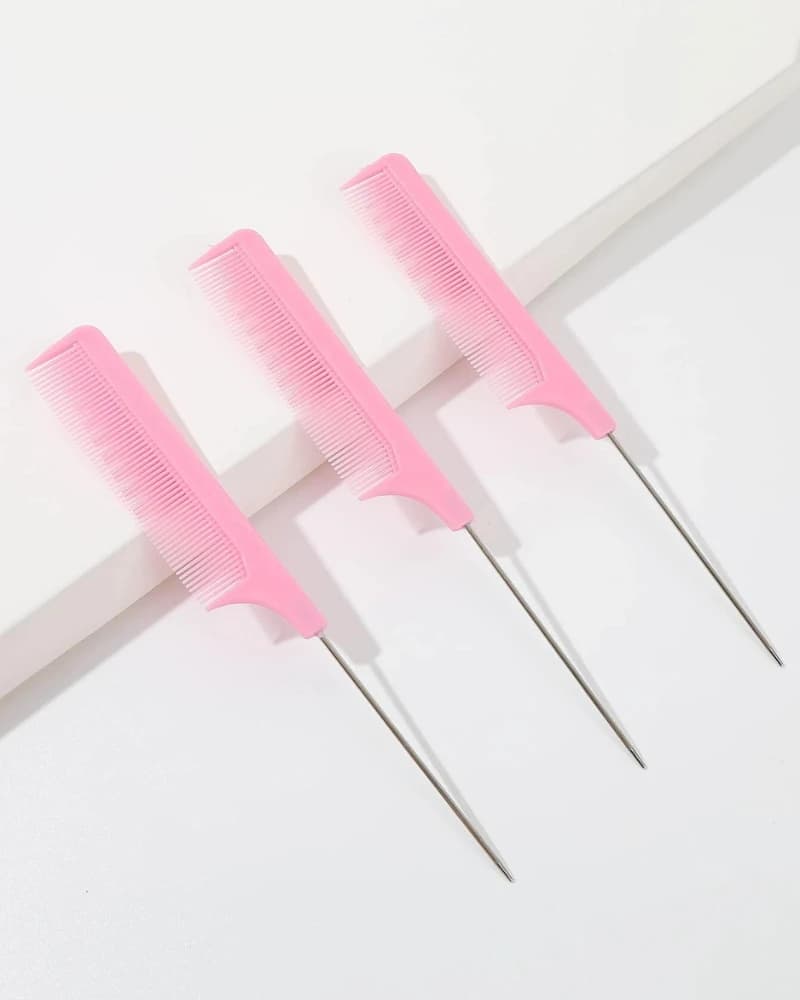
- Steel pin tail for parts you can see
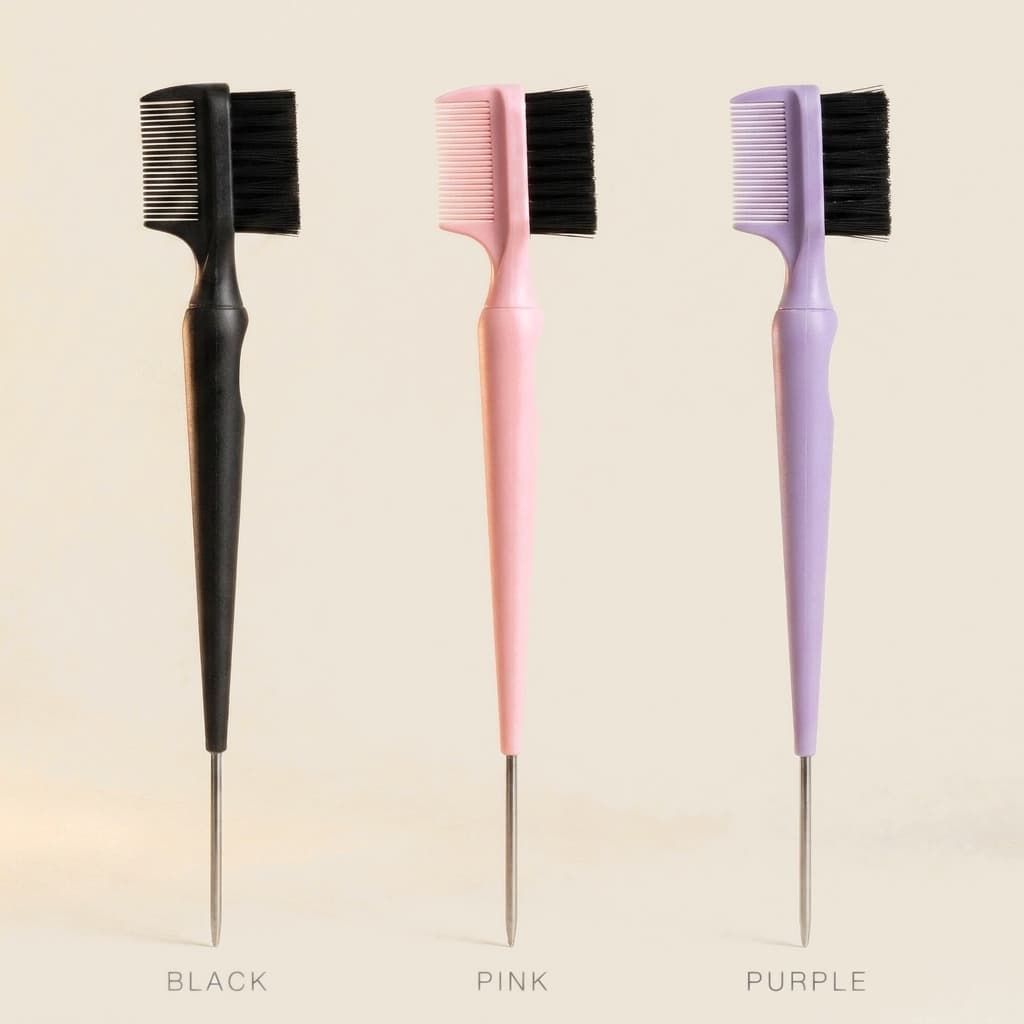
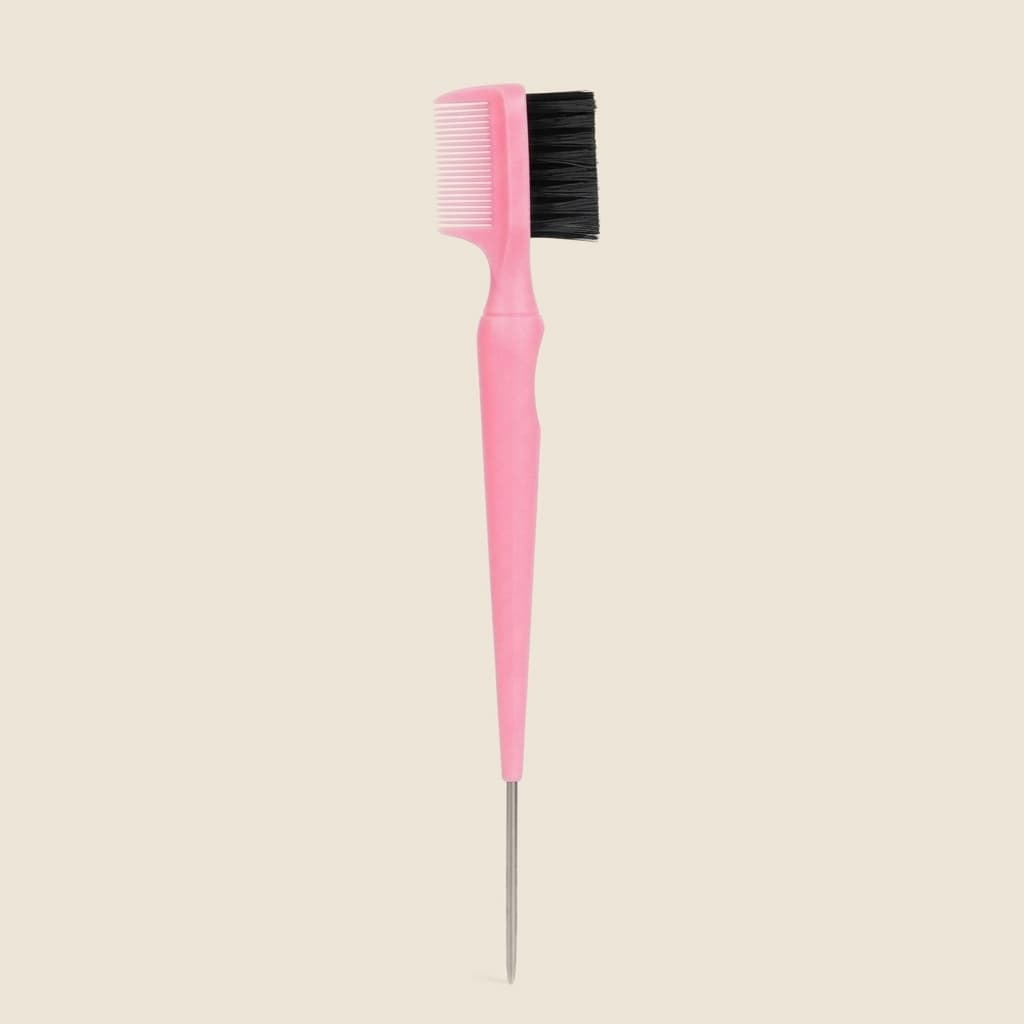
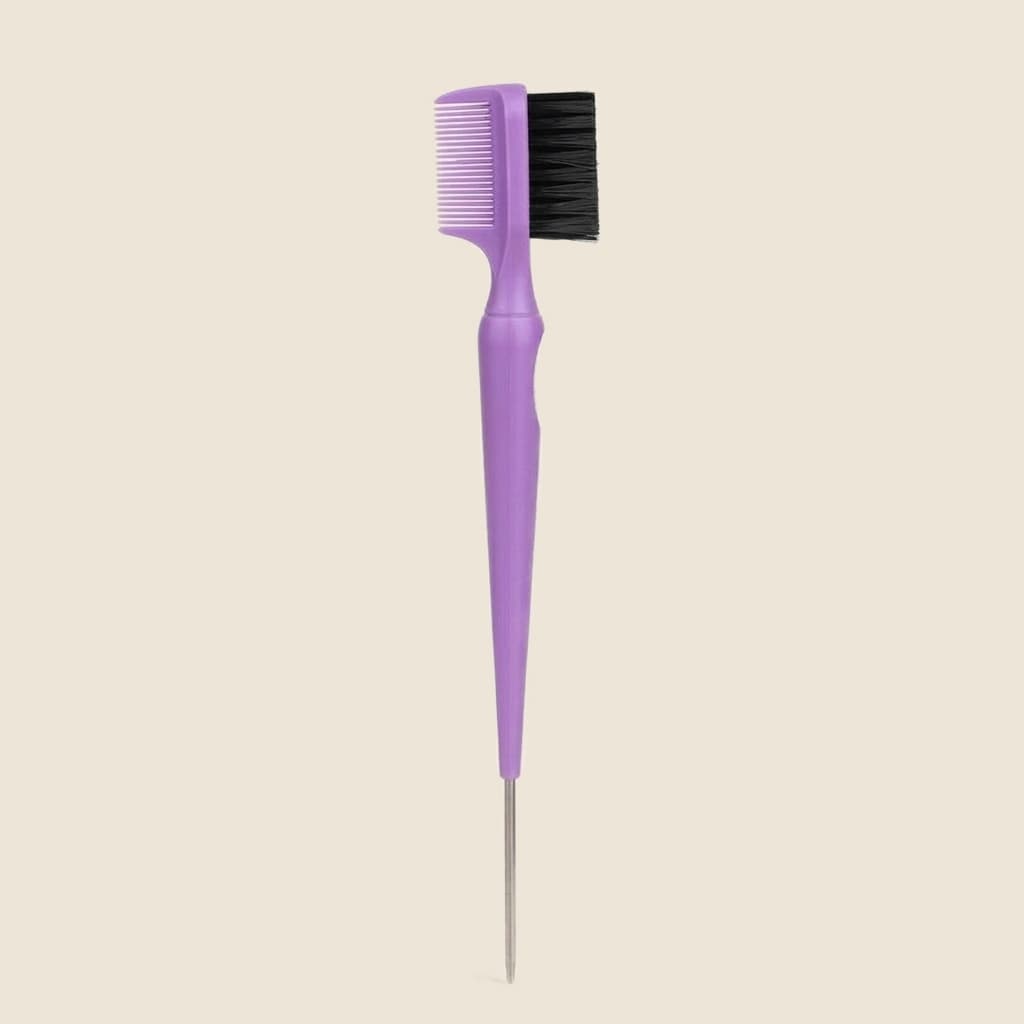
- 37 g, tapered handle, three colors
- Free US & Canada shipping
- 60-day returns
- Tracked delivery
Why it works
Gel moves, roots stay
Bristles that are soft and packed dense load with gel and carry it through the hairline under light pressure.
A line you can see
Flip the head over to the fine-tooth comb to draw the arc of the swoop and the separation between curves.
Steel, not plastic
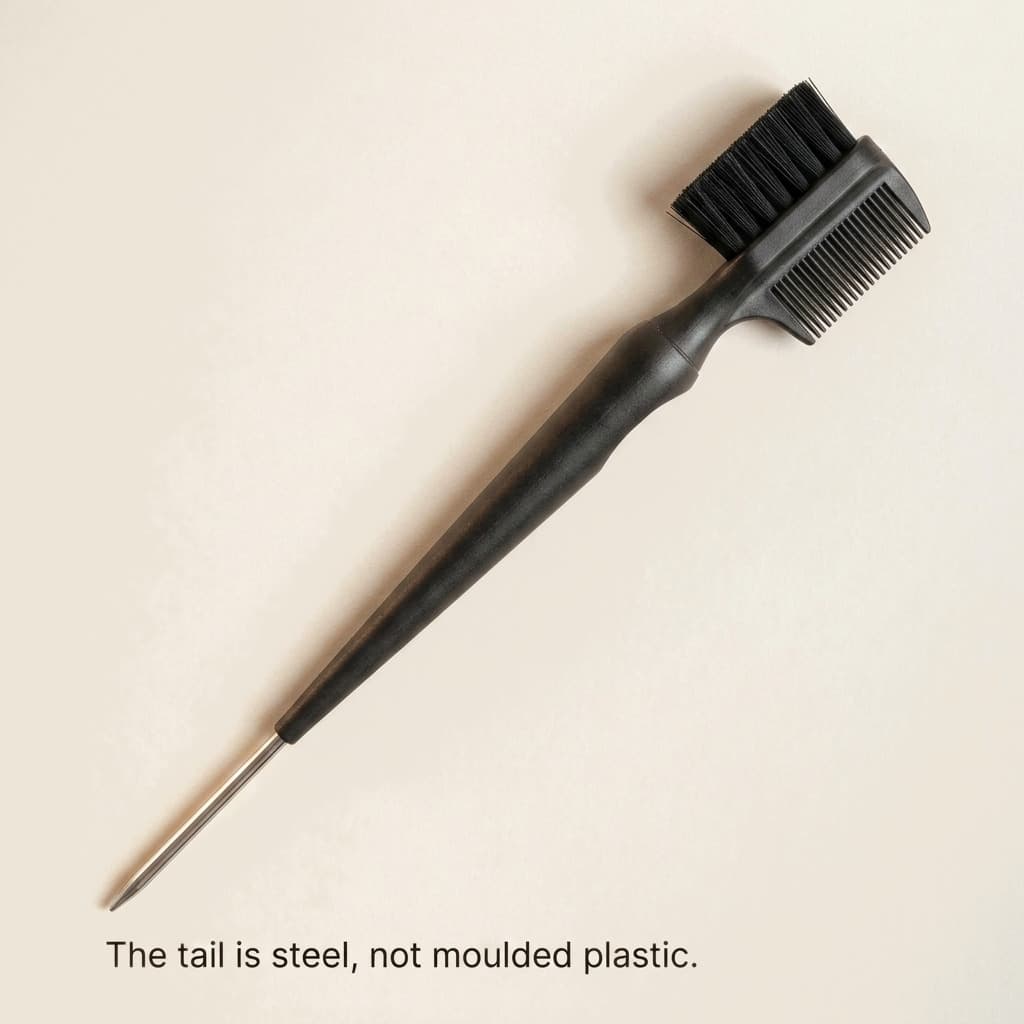
The tail is a steel pin, thinner than a molded plastic point, so it parts on the first pass without gouging.
Three tools, one body
Comb, brush and pin in one handle, so you never put it down mid-style with gel drying on your hairline.
How to use it
Part first
Pull the steel pin along the section you want and set your part before any product goes on. A wet part is a crooked part.
Load the bristles
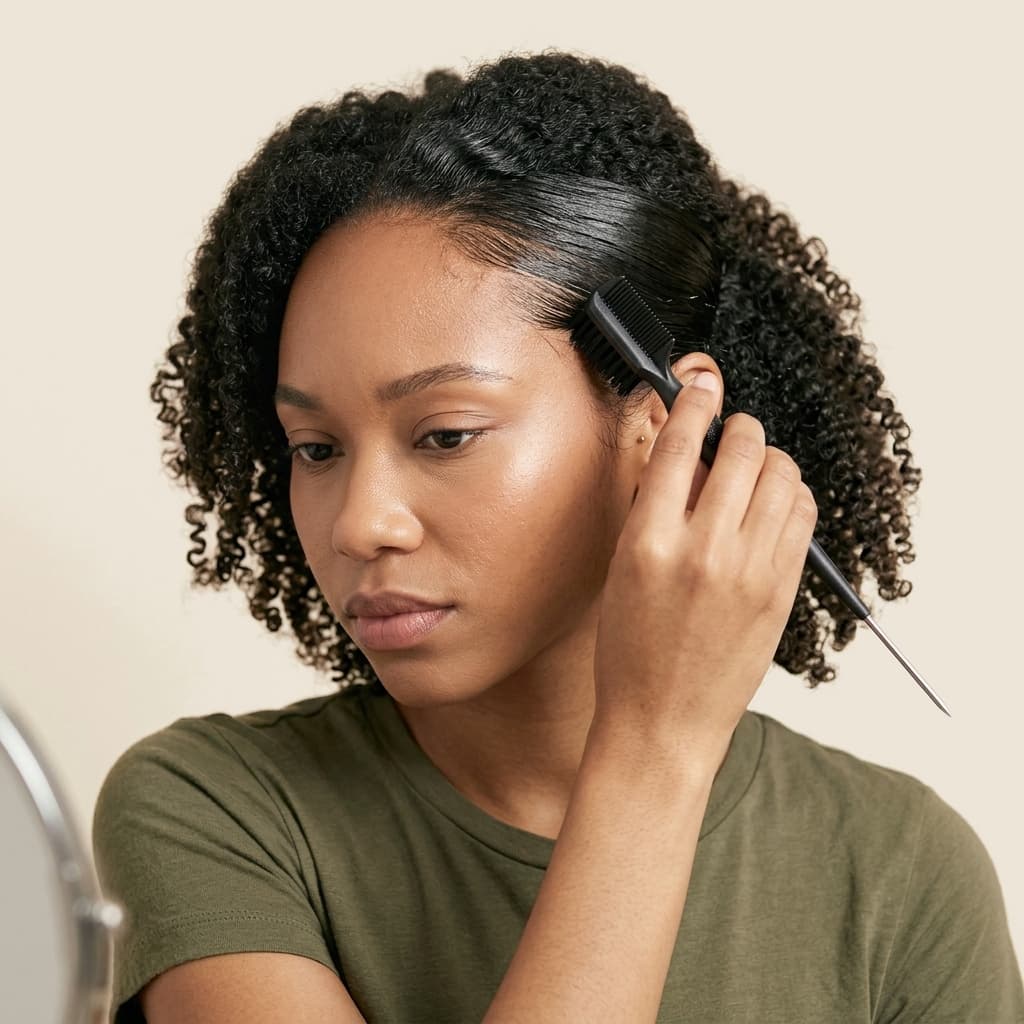
Take gel onto the bristle face rather than onto your hairline. The brush carries it in so your fingers don't have to push it in.
Lay in short strokes
Brush from the part outward in short passes, following the curve you want. Light pressure, and let the bristles do it.
Set the swoop
Flip to the fine-tooth side, draw the outline of each curve, then tie down and let it dry.
Five reasons people keep one
Built for fragile edges
Edges are the finest hair on your head and the hardest worked. Soft dense bristles mean you stop pressing harder to get the same result.
Comb and brush in one
Bristles smooth and blend, the comb draws the line. Trying to do both with one face is why most edge brush results look mushy.
A steel pin tail
Steel is thinner than a molded plastic point, so it slides between the hairs to the scalp and gives a clean part with less pressure.
Handle that switches grip
The taper sits between two fingers like a pen while you part, then drops back into your palm when you go back to brushing.
Small enough for small hands
At 37 g and 110 mm it fits a child's hand, and the soft bristle face is the forgiving one to learn light-pressure strokes on.
How it compares
| What we compared | Curltastic | The usual |
|---|---|---|
| Bristles | Soft and packed dense | Stiff plastic spikes |
| What moves | The gel moves, the root stays | Bristles skate, hair drags |
| Tail | Steel pin, thin and precise | Molded plastic point, thick and blunt |
| Tools in the body | Comb, brush and pin tail | One bristle face only |
| Shaping | Fine comb draws each curve | Bristles alone, mushy outline |
| In the hand | 37 g with a tapered handle | One grip, however it sits |
Questions people ask
What is the pointed end for?
Parting and sectioning. It is a steel pin, so it slides through hair to the scalp and gives you a clean line in one pass. Use it for parts, braid sections, and lifting a piece out of a swoop you have already laid.
Is a steel tip safe on my scalp?
It is thinner than the molded plastic points other edge brushes use, which means it needs less pressure to part with, and pressure is what hurts. Lay it flat against the scalp and pull, don't dig.
Will this work on 4C edges?
Yes. Dense soft bristles are what tight, fine edges need. They hold enough gel to move it through coily hair without the stiff-bristle drag that snaps baby hairs at the root.
How is this different from a normal edge control brush?
Most are one face of bristles and nothing else. This is three tools in one body, comb, brush and steel pin tail, so the whole style happens without putting the tool down and re-wetting your hands.
Can my daughter use it on her own hair?
It is 37 g and 110 mm long, so it sits in a small hand, and the soft bristle face is the forgiving one to learn on. Show her the light-pressure stroke first.
Use it for two months. Send it back if it doesn’t hold up.
Full refund, no photos, no restocking fee. US return shipping is on us.
Back to the top