
You've bought the conditioner everyone swears by, and it sits on top of your hair like a coat of wax. Or your hair drinks up everything you give it and feels dry again by lunch. Either way, you're probably looking at a porosity problem, and the fix starts with knowing which one you have.
The quiz above asks eight questions about how your hair behaves on wash day and puts you on the scale from low to high. You get your result straight away, with no email. The sections below explain what each result means, so you can check it against your own hair.
What is hair porosity?
Every strand has a cuticle, a layer of tiny overlapping scales on the outside, and they work like shingles on a roof.
When the shingles lie flat, water has a hard time getting in. That's low porosity. When they're lifted, water rushes in, and it leaks back out just as easily. That's high porosity. Medium porosity is the middle: the cuticle opens enough to let moisture in and closes enough to hold it.
Porosity tells you nothing about your curl pattern, how thick your hair is or how healthy it looks. It only tells you how your hair handles water, and that decides which products sink in and how long a treatment needs.
Low, medium and high porosity: the signs side by side
| Low porosity | Medium porosity | High porosity | |
|---|---|---|---|
| Cuticle | Flat and tight | Opens and closes easily | Raised |
| Water spray | Beads up or sits on top | Soaks in after a bit | Soaks in straight away |
| Air dry | 4 hours or more | 1 to 3 hours | Under an hour |
| Leave-in | Sits on top or flakes | Takes a minute | Disappears straight away |
| Buildup | Often | Sometimes | Rarely |
| Needs moisture again | Once a week or less | Every few days | Every day |
| Heat cap | 25 min, high setting | 20 min, high setting | 15 min, low setting, then a cool rinse |
Low porosity
Low porosity hair keeps water out, and it keeps product out too. That's why creams pile up as buildup instead of sinking in. What helps: light, water-based products on damp hair, a clarifying wash to clear the buildup, and heat when you deep condition. Heat lifts the cuticle so the conditioner can get in. Low porosity is the result that needs heat the most.
Medium porosity
Medium porosity hair takes moisture in and holds onto it. Your job is to keep it that way. Deep condition regularly, with heat when you can, and go easy on protein treatments. Use them in moderation, not every wash.
High porosity
High porosity hair takes in water fast and loses it just as fast. It often feels rough and tangles easily straight out of the shower. What helps: richer, creamier products and heavier oils to slow the water loss, protein masks to strengthen it, and a cool-water rinse at the end. Go light on heat in general. Air dry when you can.
How do you test hair porosity at home?
There are four hand tests you can do at home, and three of them are worth your time. The quiz uses the same signs and scores them together, which is more reliable than any single test.
The spray test
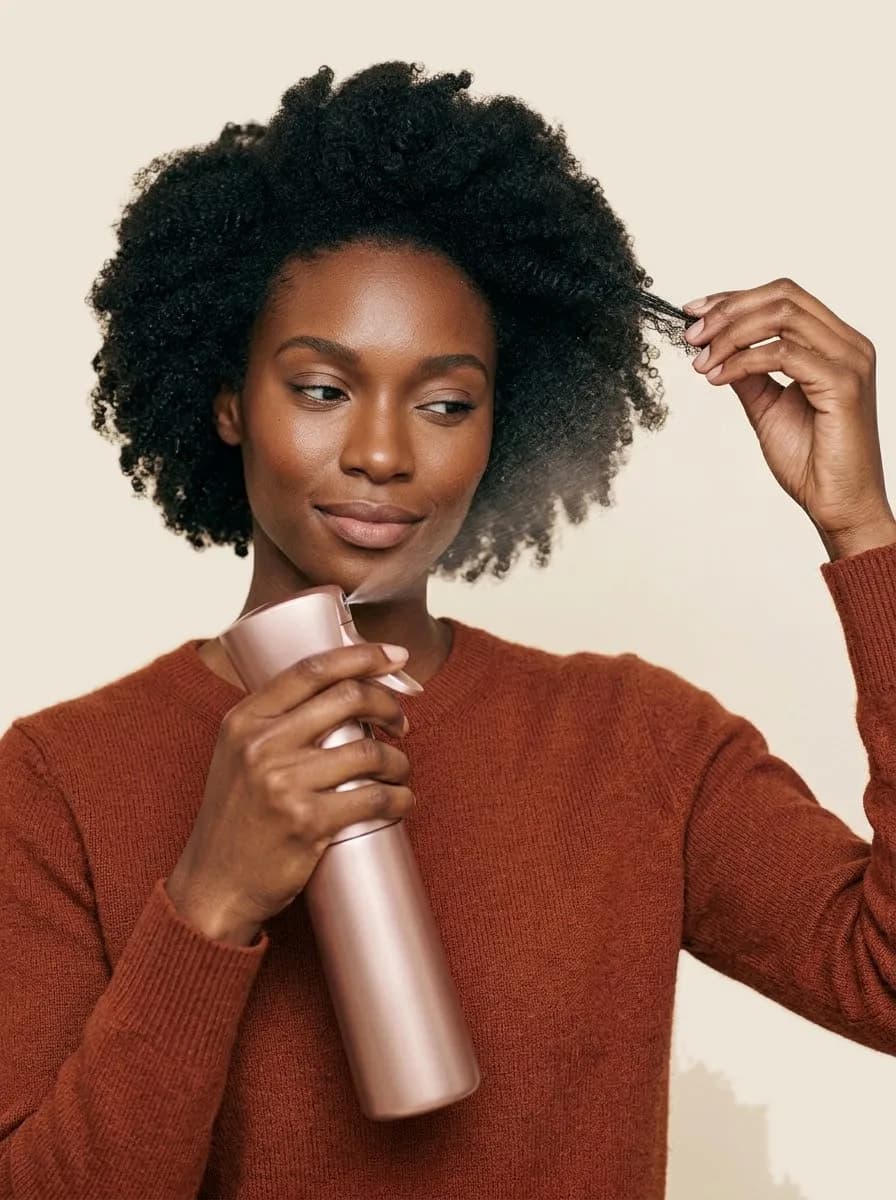
Take a dry section of clean hair, mist it with a fine-mist spray bottle and watch what the water does.
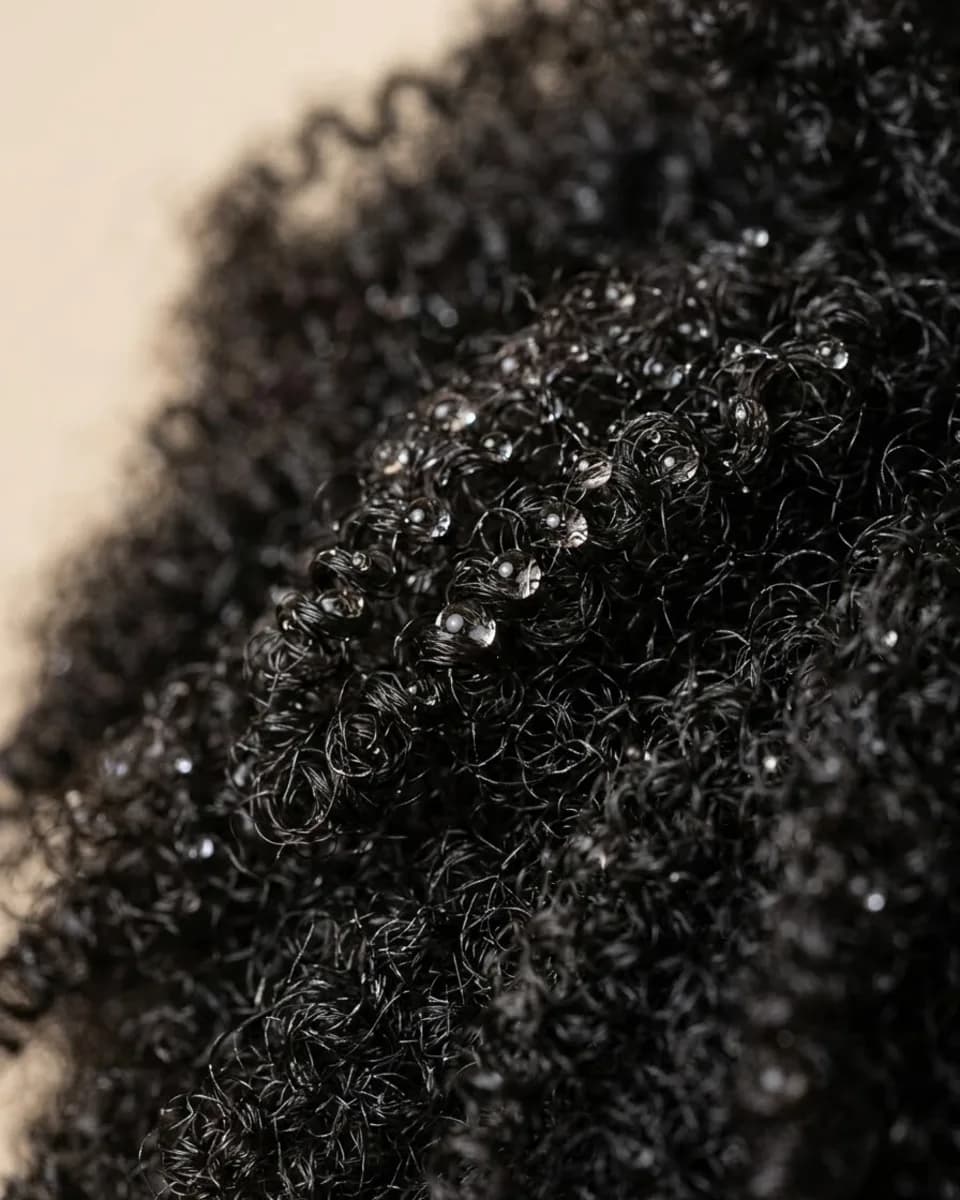
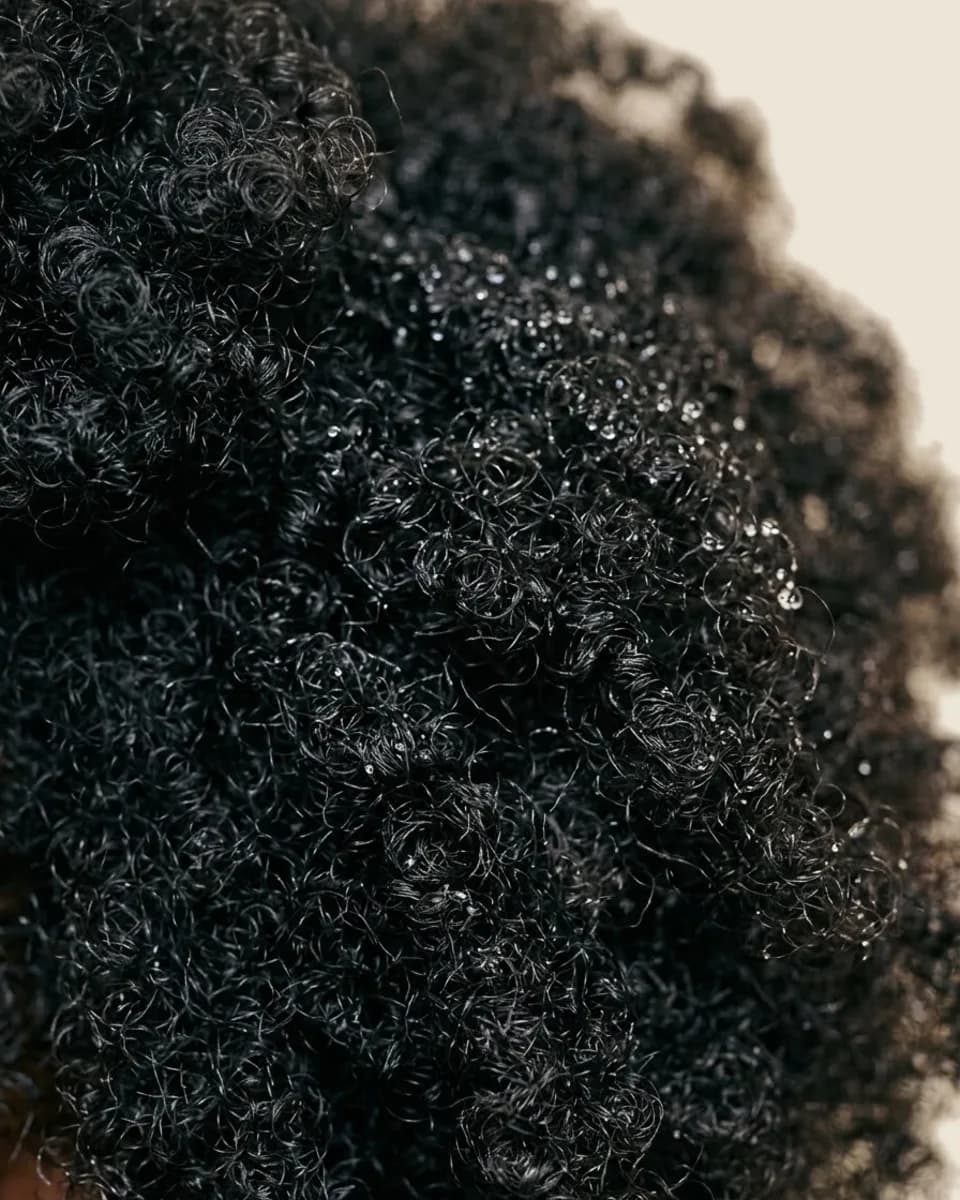
If the water beads up and sits on the surface, your cuticle is keeping it out: low porosity. If it soaks in after a moment, you're medium. If it vanishes and the hair darkens straight away, you're high. This is the best of the hand tests because you can see the answer.
The dry-time test
After your next wash, let your hair air dry and note the time. Four hours or more points to low porosity, one to three hours to medium, and under an hour to high.
Thick, dense hair takes longer to dry simply because there's more of it, so read this one alongside the spray test.
The slip test
Pinch a single strand and slide your fingers along it, from the tip toward the root. If it feels smooth all the way, the cuticle is lying flat. If you feel bumps or it catches, the cuticle is lifted.
It's a rough read. Use it as a tiebreaker when the spray test and dry time point in different directions.
Why is the float test the least reliable?
You drop a clean strand into a glass of water and wait. A strand that floats is meant to be low porosity, one that sinks is meant to be high, and one that hangs in the middle is meant to be medium.
It's the test everyone has heard of, and it's the least reliable of the four. Whether a strand floats or sinks depends more on the oils on it, any product residue and the surface tension of the water than on its porosity. A strand with leftover leave-in on it can float when it shouldn't. The same strand, freshly clarified, can sink. The quiz explains the float test but doesn't score it.
How long should you deep condition with heat?
The range is 15 to 30 minutes with heat. The porosity guides we read keep landing on it. Where you land inside it depends on your result:
- Low porosity: 25 minutes on the high setting. The flat cuticle needs the most help opening up.
- Medium porosity: 20 minutes on the high setting. Enough heat to push moisture in, no need to go long.
- High porosity: 15 minutes on the low setting, then a cool rinse. The cuticle is already open. The cool water helps it close again and hold what went in.
Your conditioner's label has the last word. Most say 15 to 30 minutes. Don't leave it on overnight. Going that long can over-hydrate your hair and leave buildup. The timer on your result starts at your number, and you can move it anywhere from 10 to 30 minutes to match the jar.
Time: 30 min. What you need: Heat cap, Deep conditioner, Microfiber towel.
- Squeeze out the waterAfter washing, squeeze the water out with a microfiber towel so the conditioner isn't watered down. Don't rub.
- Apply in sectionsWork the deep conditioner through in sections, ends first, until every strand is coated.
- Cover and heatPut on a plastic cap, then the heat cap. Use the high setting for low and medium porosity and the low setting for high porosity.
- Set the timer25 minutes for low porosity, 20 for medium and 15 for high, or whatever your conditioner's label says.
- RinseRinse out the conditioner. If you're high porosity, finish with a cool-water rinse to help the cuticle close.
Our electric heat cap is corded, with two heat levels, and it holds its temperature until you switch it off. There's nothing to reheat halfway through a session. Use the lower setting for light treatments and the higher one for a heavy mask. Want the heat without the cap on your head? A soft hooded dryer attachment does the same job.
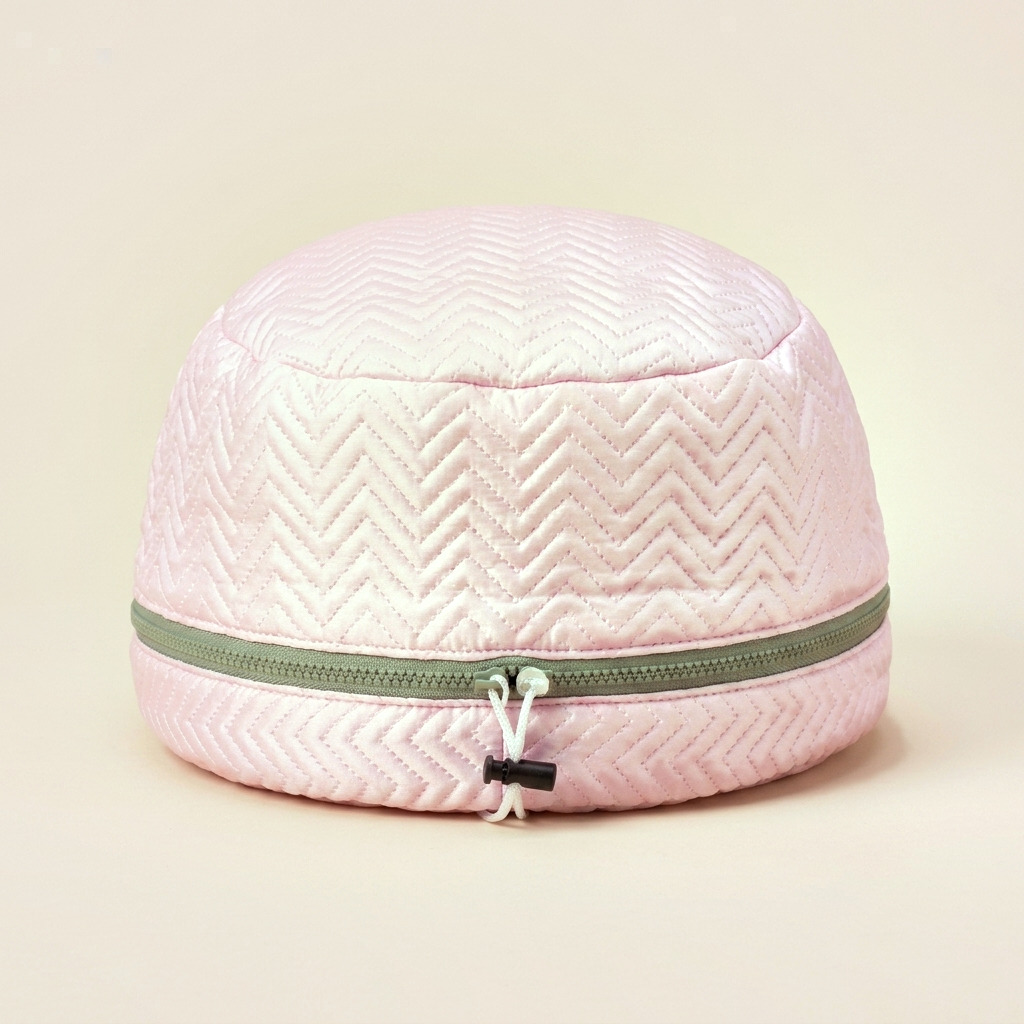
When you're done, squeeze the water out with a microfiber towel instead of rubbing with a bath towel. That counts double for high porosity hair, which is already rough on the surface.
Porosity on type 4 hair and kids' hair
Type 4 hair
Type 4 coils shrink a lot, and shrinkage hides dryness. A puff can look full and feel soft on the outside while the ends tucked inside the coil are parched. So don't judge moisture by how your hair looks. Use the signs above: how long it takes to dry, and how fast it needs moisture again.
Density can also throw off the dry-time test. A full head of 4c hair can take hours to dry whatever its porosity. That's why the quiz weighs dry time alongside the spray test and the leave-in test, never on its own.
"This is great! Shrinkage is real...and this gets through the tangles with little to no problem at all." Terri B.
Kids' hair
Parents doing a child's hair are our biggest group of customers, so here's the short version. The quiz works the same way for a child: tap "My child" at the top and answer for their hair. What changes is how you handle it.
Keep sittings shorter and the heat gentler. Use the low setting on the cap and stay at the short end of the label's time. A kid who's comfortable sits still. One who's hot and bored is pulling the cap off at minute ten.
Do the hard part before the heat goes on. Detangle while the conditioner is in, before the cap goes on, so the heat isn't the part of wash day your child remembers:
"Love the wonder brush. It detangles me and my 2 daughter's 4c hair so lovely. Wash days are so much easier for all 3 of us. I am truly thankful!" Nicole B.
"I LOVE IT! This brush slides through my daughter’s thick 4c hair with so much ease. I went from wash to style in half the time." Alyssa T.
Can hair porosity change?
Yes, and it usually goes up. Bleach, color, relaxers and regular flat-ironing all lift and wear down the cuticle, which pushes hair toward high porosity. That's why the quiz asks whether your hair has been through any of them in the last year.
The processed hair stays that way. The new growth at your roots hasn't been through any of it, so roots and ends can behave like two different heads of hair. If you're growing out color or a relaxer, test the ends and the roots separately, and treat the ends as high porosity until they're cut off.
Frequently asked questions
Sources
Hand-test signs, the 15 to 30 minute deep-conditioning range, the cool-rinse advice for high porosity and the warning against overnight conditioning come from published low-, medium- and high-porosity regimen guides and porosity quizzes from textured-hair brands, read October 10, 2026. Heat cap details come from our own product page. The timer defaults sit inside that shared range and are our recommendation.
Take the quiz above, set the timer on your result, and let the heat cap do the rest.