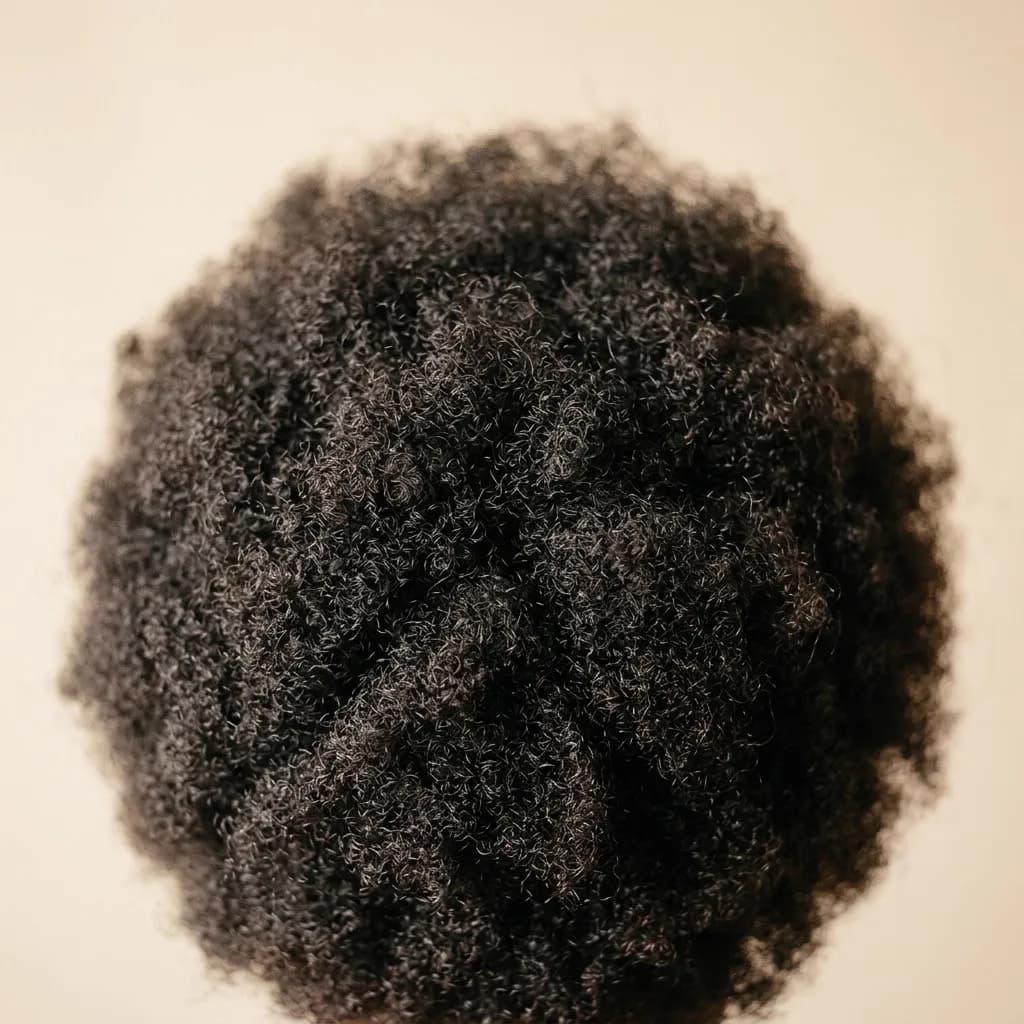
Most hair type charts are a picture of twelve squiggles. You squint at it, pick the one that looks closest, and still aren't sure if you're a 4B or a 4C. Ours does the squinting for you.
Tap any type on the chart above to read what it looks like, how much it shrinks and how to care for it. Or take the quiz: five short questions about how your hair dries, how wide one curl is and how much it shrinks, and the chart lights up your type. If some of your hair is looser or tighter, it lights a second type too. No email, nothing to sign up for.
How the hair type chart works
The chart has four rows and three columns. The row is the shape your hair dries in. The column is how wide that shape is.
- Type 1, straight. No bend from root to end. The letter comes from how thick each strand is.
- Type 2, wavy. An S shape. The higher up the wave starts, the higher the letter.
- Type 3, curly. Spirals and ringlets you can see, from wide loops to tight corkscrews.
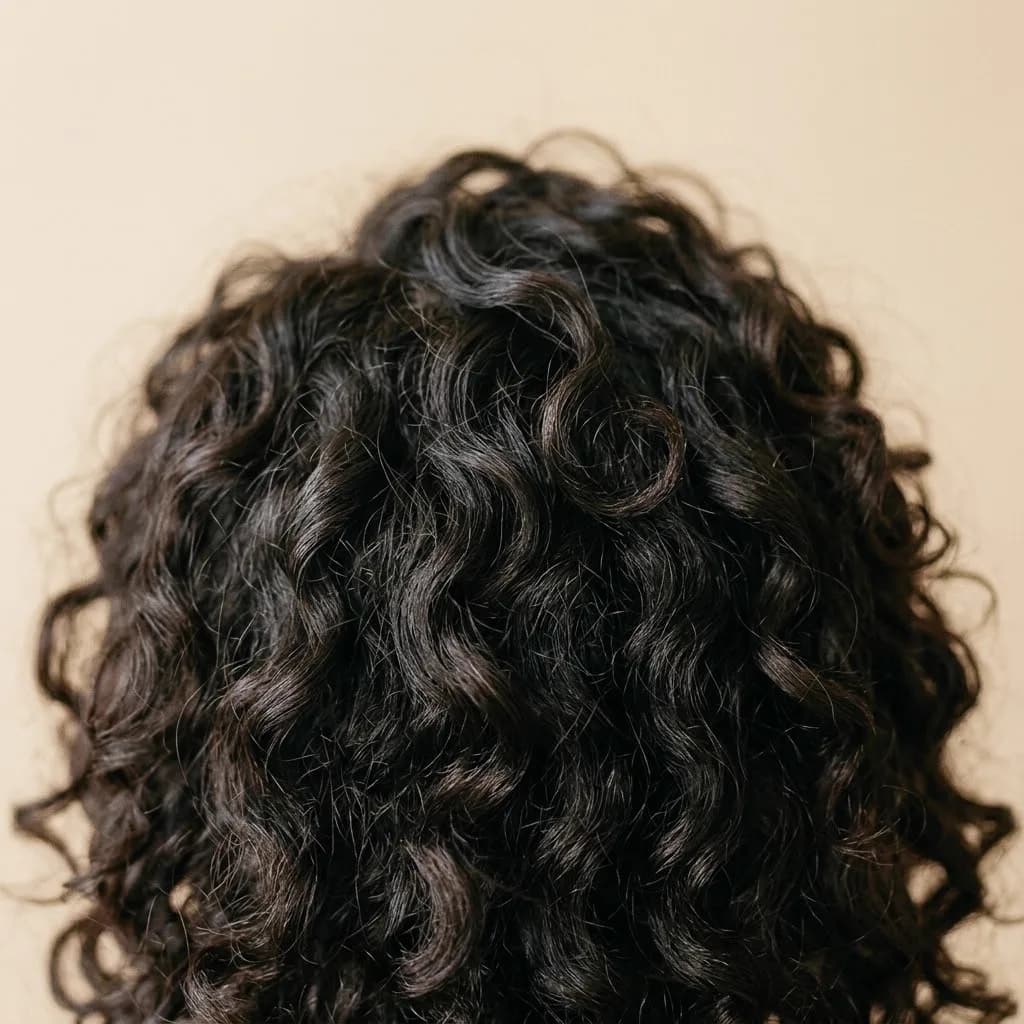
- Type 4, coily. Small coils and zig-zags, packed close together, with the most shrinkage.
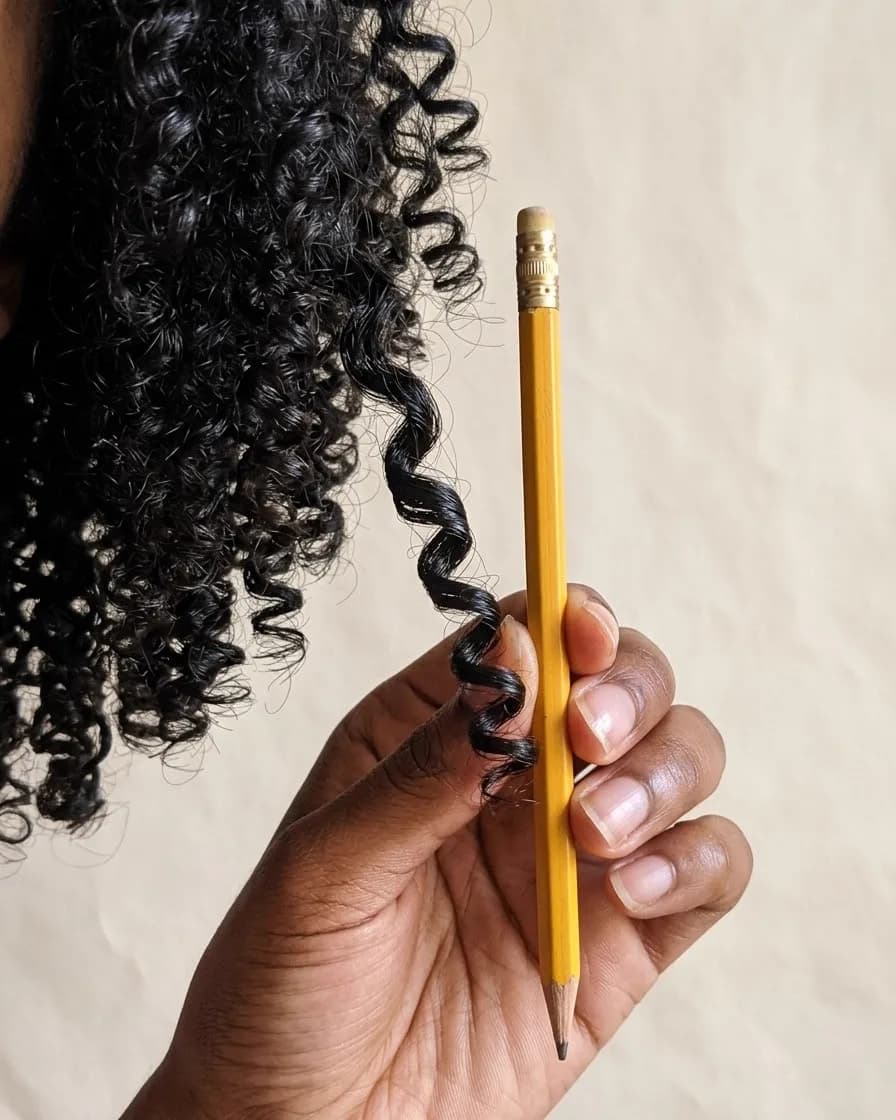
Within types 3 and 4, the letter is the width of one curl. That's the whole trick. Two people can both have "curly" hair, but if one curl is as wide as a piece of sidewalk chalk and the other is as wide as a pencil, one is 3A and the other is 3C.
Why one head often has two types
Most curly and coily hair isn't one type all over. The crown and the nape are often tighter than the sides. The hair around your face might be a looser pattern than the back. That's normal, and it's why the quiz asks one last question: is all of your hair like that? If some sections are tighter, the chart lights the next type up as a second type.
How to find your hair type by hand
You don't need the quiz to type your hair. You need clean hair, a mirror and something to compare one curl against. This is the same test the quiz walks you through.
Time: 30 min. What you need: Shampoo and conditioner, A mirror, A pencil, A soft tape measure or ruler.
- Wash and skip the productWash and condition as usual, then leave out every leave-in, cream, gel and oil. Product changes how your curls clump, so it changes how your type looks.
- Let it air dryLet your hair dry on its own without touching it, brushing it or wrapping it. No blow dryer and no diffuser.
- Look at the shapeCheck a section from the middle of your head. Is it straight, an S-shaped wave, a spiral curl, a small coil or a sharp zig-zag? That's your number.
- Size one curlHold one curl next to sidewalk chalk, a marker, a pencil or a crochet needle. The closest match is your letter: chalk 3A, marker 3B, pencil 3C, crochet needle 4A. Smaller than a crochet needle is 4B or 4C.
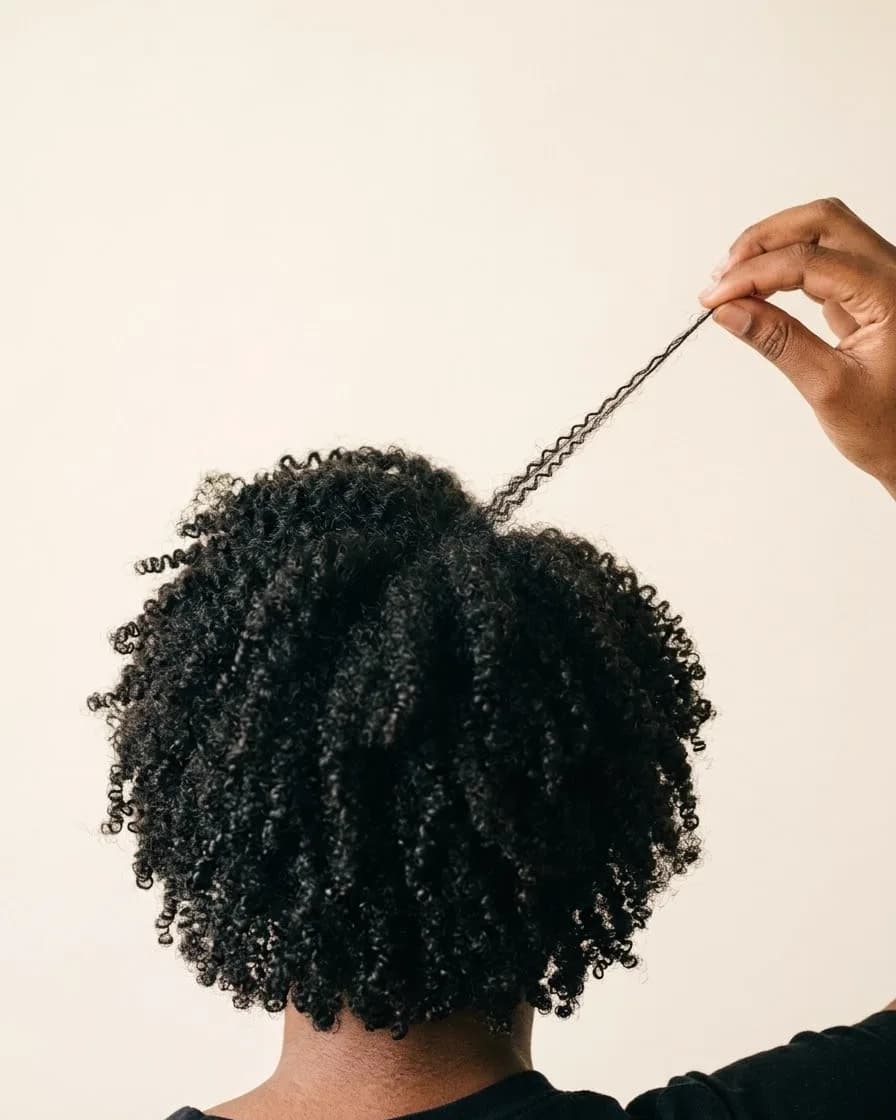
- Stretch one curlMeasure a curl as it sits, then gently pull it straight and measure again. If it sits at less than a quarter of its stretched length, you're likely 4C. If it's between a quarter and a half, 4B or 4A.
Why we use objects, not coins
Some charts size curls against coins. Others use chalk, a marker and a pencil. The two ladders agree that pencil is 3C and crochet needle is 4A, but they disagree on 3A and 3B. We picked the objects so the whole scale is one set of things you can hold, from the widest curl down to the tightest coil.
Type 4 hair: 4A vs 4B vs 4C
Type 4 is the most common type in our customers' reviews. Of the 2,012 reviews of our WonderBrush, 162 name a hair type, and 94 of those say 4C. Here's how the three type 4 patterns differ.
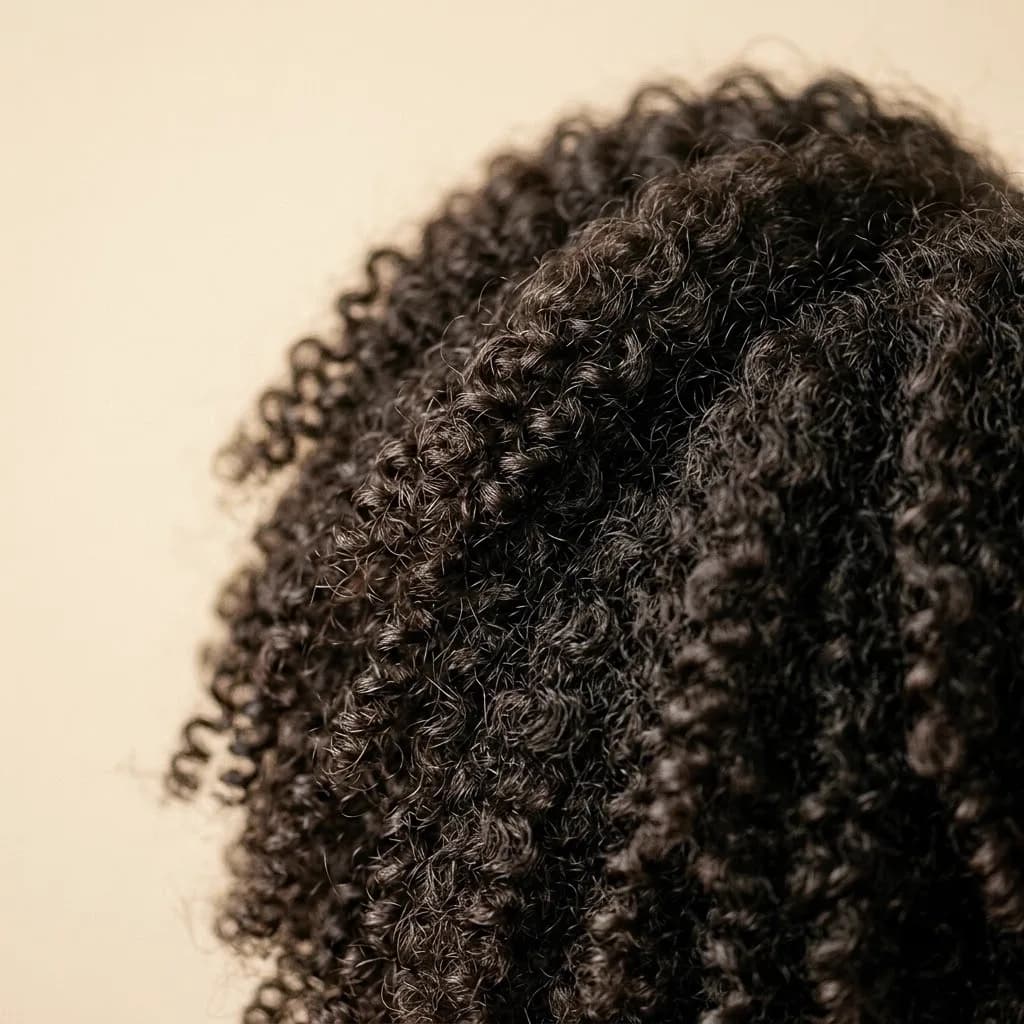
4A forms small, springy S-shaped coils about the width of a crochet needle. The pattern is easy to see, and it usually shrinks by half to three quarters.
4B bends in sharp Z-shaped angles instead of curving. You see less of a curl pattern and more fluffy volume. It shrinks by 75% or more.
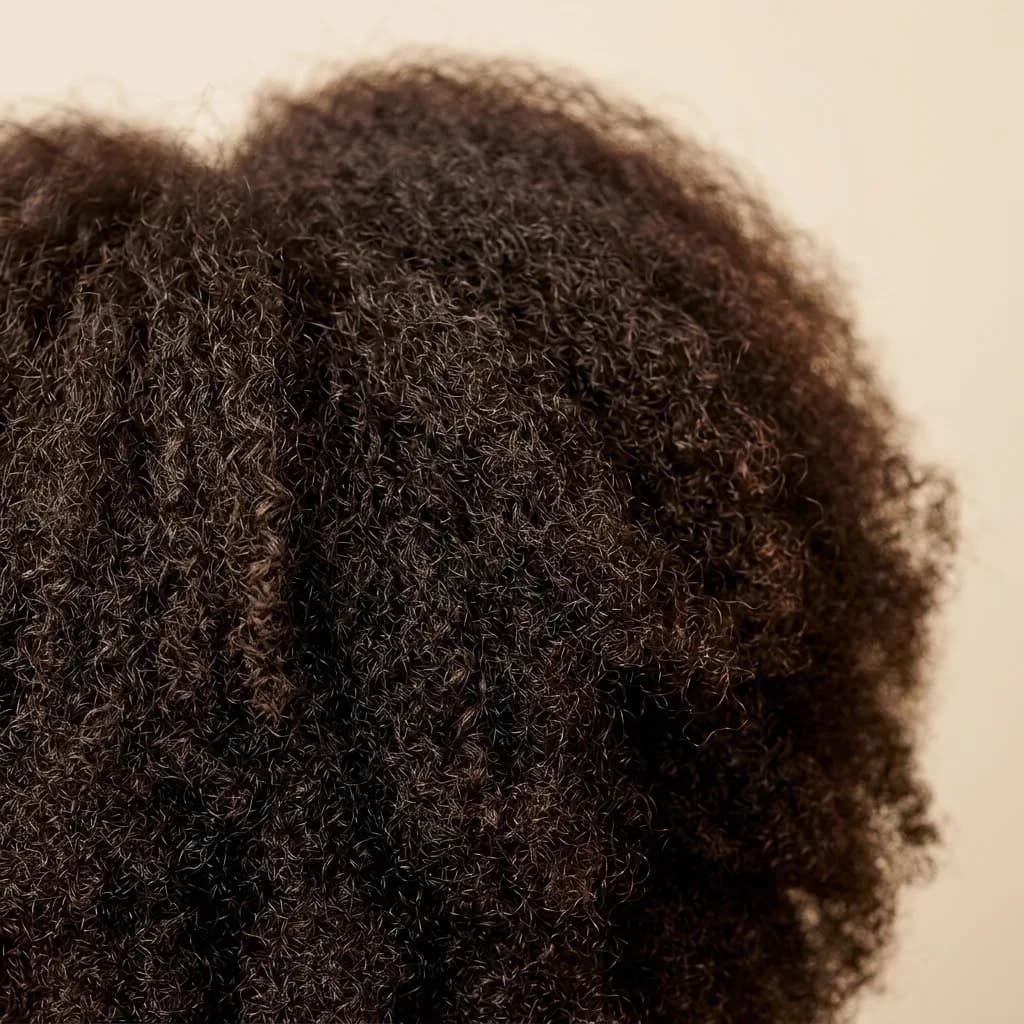
4C is the tightest zig-zag of all. The pattern can be hard to see at all, especially on dry hair, and it shrinks the most, often to a quarter of its stretched length or less.
4B or 4C?
This is the call people get stuck on most, because both shrink 75% or more. Look at one strand. If you can see a clear Z shape, it's 4B. If the strand is so tight you can't see a pattern, or your hair dries into a dense, soft cloud with no defined coils, it's 4C. The quiz settles it with shrinkage: smaller than a crochet needle and over three quarters shrinkage is 4C, anything less is 4B.
Why 4C hair is hard to type
4C coils are so small and so close together that they clump into one shape instead of separate curls. Wet, you might see tiny coils. Dry, you see volume. That's why the quiz has a "can't see a curl pattern" answer. On our chart, that answer means 4C.
Type 3 hair: 3A vs 3B vs 3C
3A curls are wide, loose loops, about the width of sidewalk chalk. They're soft and shiny and shrink the least of the curly types, up to about a quarter.
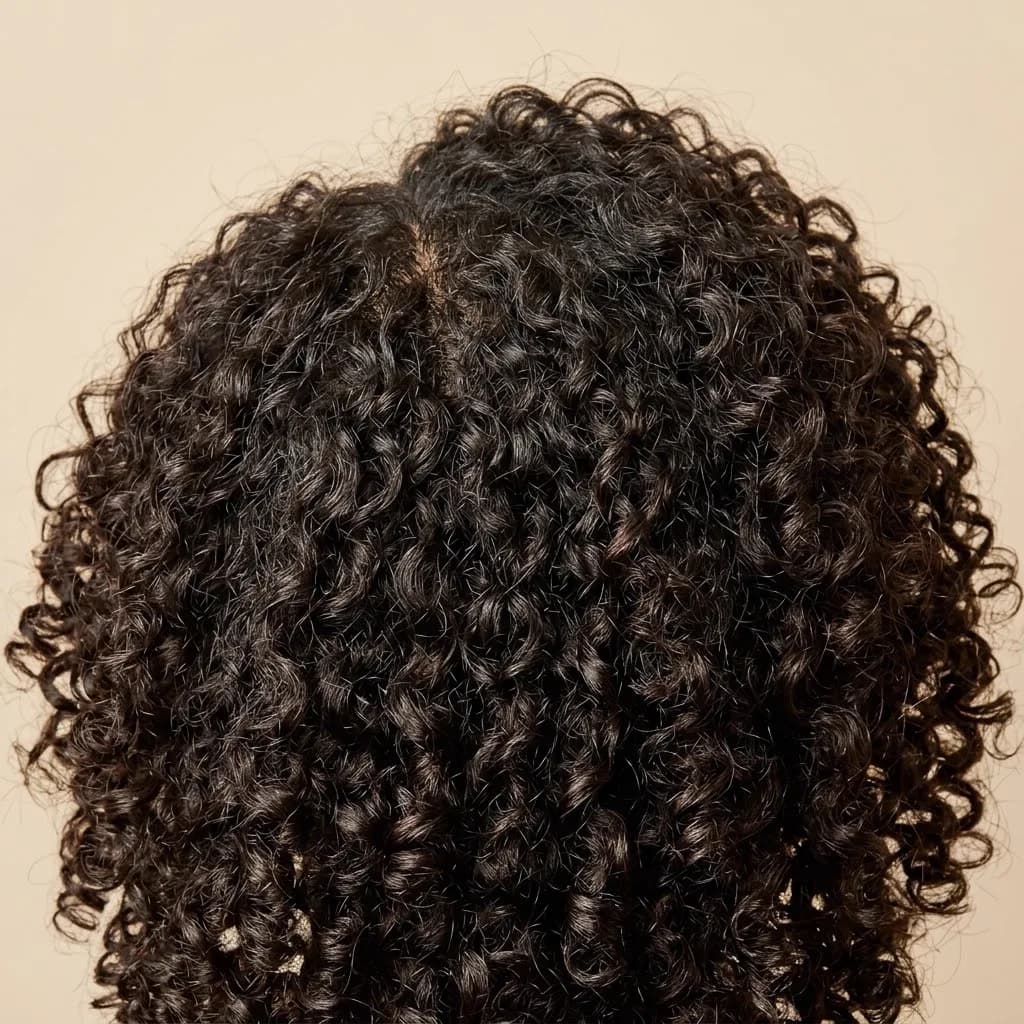
3B curls are springy ringlets about the width of a marker. They have more bounce and more volume, and shrink by a quarter to a half.
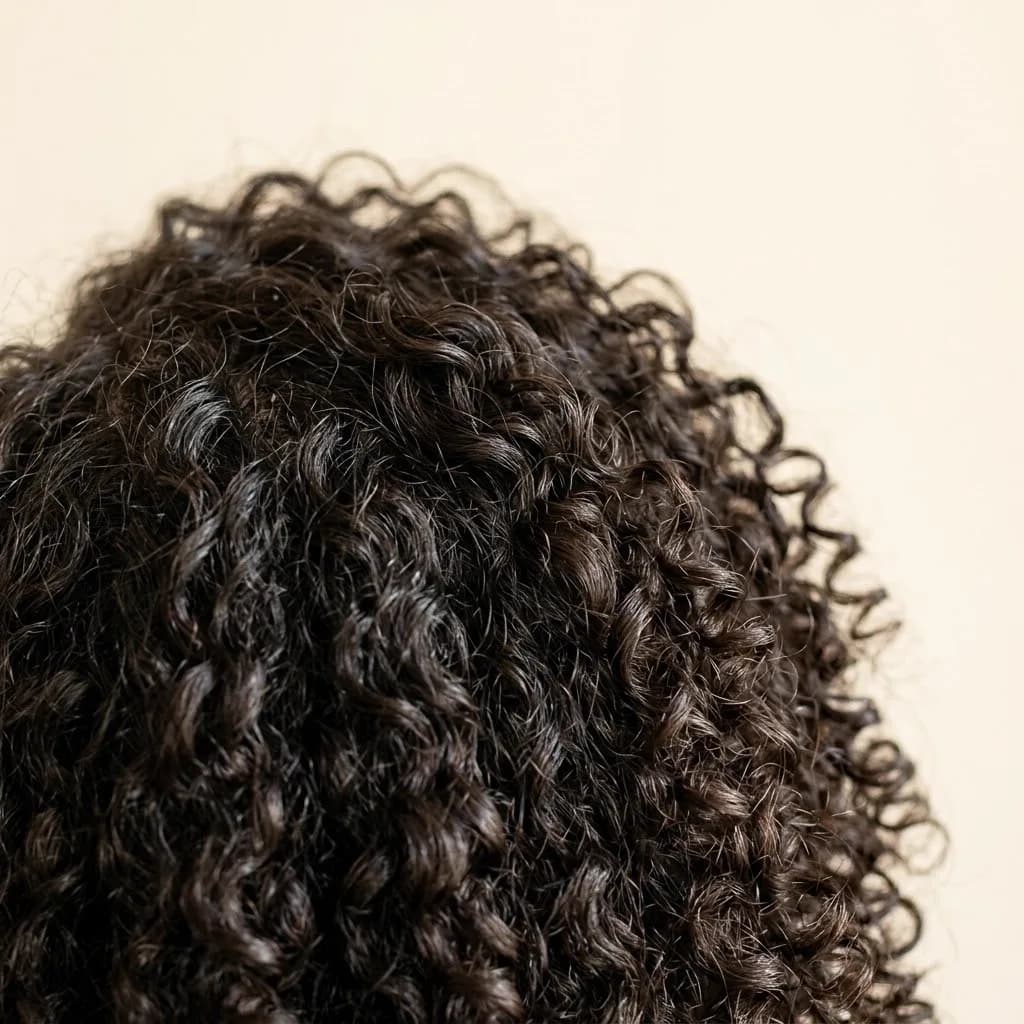
3C curls are dense corkscrews about the width of a pencil. They pack close together and shrink by a quarter to a half, sometimes more.
If your curls sit between pencil and crochet needle, shrinkage decides it. Under half shrinkage is 3C. Half or more is 4A. A smaller curl never gets a looser type on our chart.
Types 1 and 2, briefly
Straight hair is typed by how thick each strand feels. Fine, barely-there strands are 1A. Medium strands with a little bend at the ends are 1B. Coarse, thick strands with body that frizz in humidity are 1C.
Wavy hair is typed by where the wave starts. A loose S from halfway down is 2A. A clear S from the mid-lengths is 2B. Deep waves from the root, with a few loose curls mixed in, are 2C.
Hair type vs texture vs porosity
These three get mixed up all the time, and they're different things.
- Type is the shape your hair dries in, from 1A to 4C.
- Texture is how thick one strand is: fine, medium or coarse. 4C hair can be fine or coarse.
- Porosity is how easily your hair takes in water and holds it. Any type can be low, medium or high porosity.
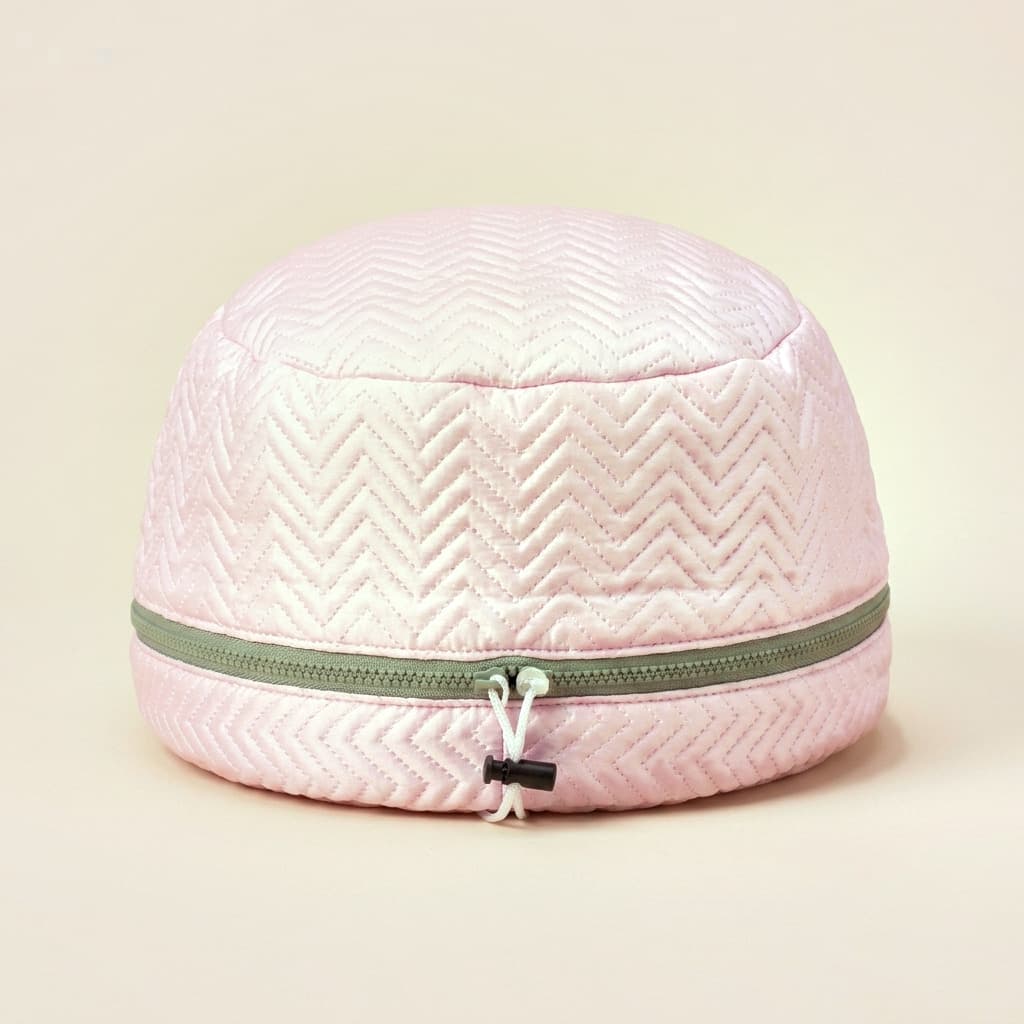
Type tells you how your hair behaves. Porosity tells you how to get moisture into it and keep it there. Our hair porosity test takes eight questions and sets a heat-cap timer for your result.
Shrinkage by hair type
Shrinkage is how much shorter your hair looks than it really is. As each coil springs back, it pulls the length up toward your scalp. The tighter the curl, the more it shrinks.
- 2C and 3A: little, up to about 25%
- 3B and 3C: 25 to 50%
- 4A: 50 to 75%
- 4B and 4C: 75% or more
At 75% shrinkage, 16 inches of hair can sit like 4. Your result on the chart above links straight to our hair length chart with your type's shrinkage already set, so you can see where your hair lands stretched and where it looks like it lands as you wear it.
Typing your child's hair
Type a child's hair the same way: wash, skip the product, let it air dry and look at the shape. The quiz has a "my child" option that changes the wording and the products it suggests. The typing itself doesn't change.
Kids' hair often changes type as they grow, so check again every year or two. And don't be surprised if siblings land on different types. Our reviews are full of parents with one child at 3B and another at 4C.
Detangling a child's coils
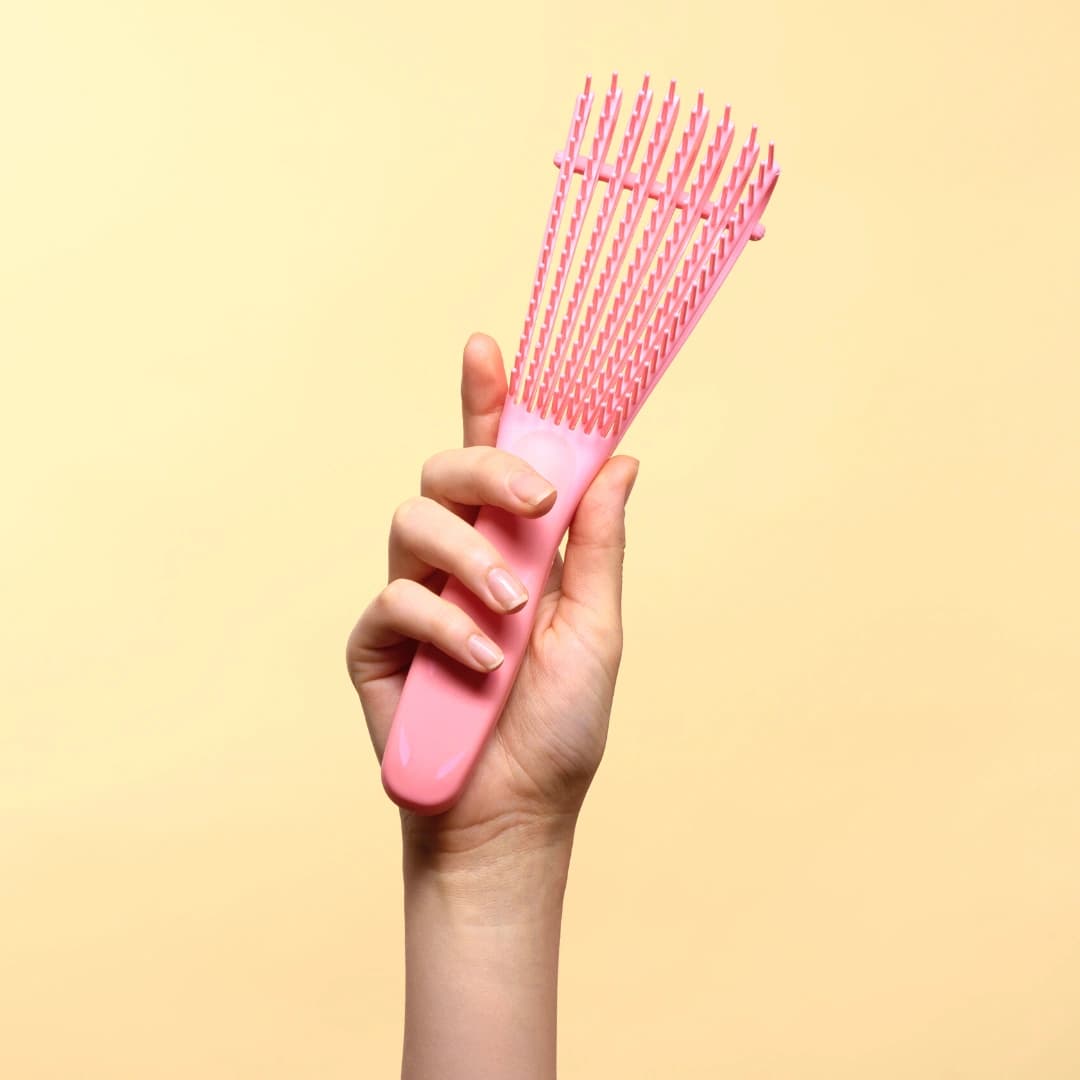
Tender heads and tight coils make for long wash days. The fix is the same for every type: detangle with conditioner in, in small sections, starting at the ends and working up to the roots. Here's what parents wrote about our WonderBrush:
"This brush is just amazing almost too good to be true! my daughters have different hair types, 4c and 3b and this brush glides through their hair with ease! highly highly recommend 💯" Angela B.
"My daughter has 3b-3c curls and this cut down combing time to 10 minutes! I divided into sections and it didn't see to bother her at all . I was even able to brush all the way through from the roots." Katie M.
"I love this brush as much as I hoped it would. It works great on my kinky (4b/4c?) hair and on my daughter's multi-ethnic (3b/3c) hair. My daughter is very tender-headed and this brush makes it so easy to get products evenly distributed throughout her hair without all the fuss." Courtney R.
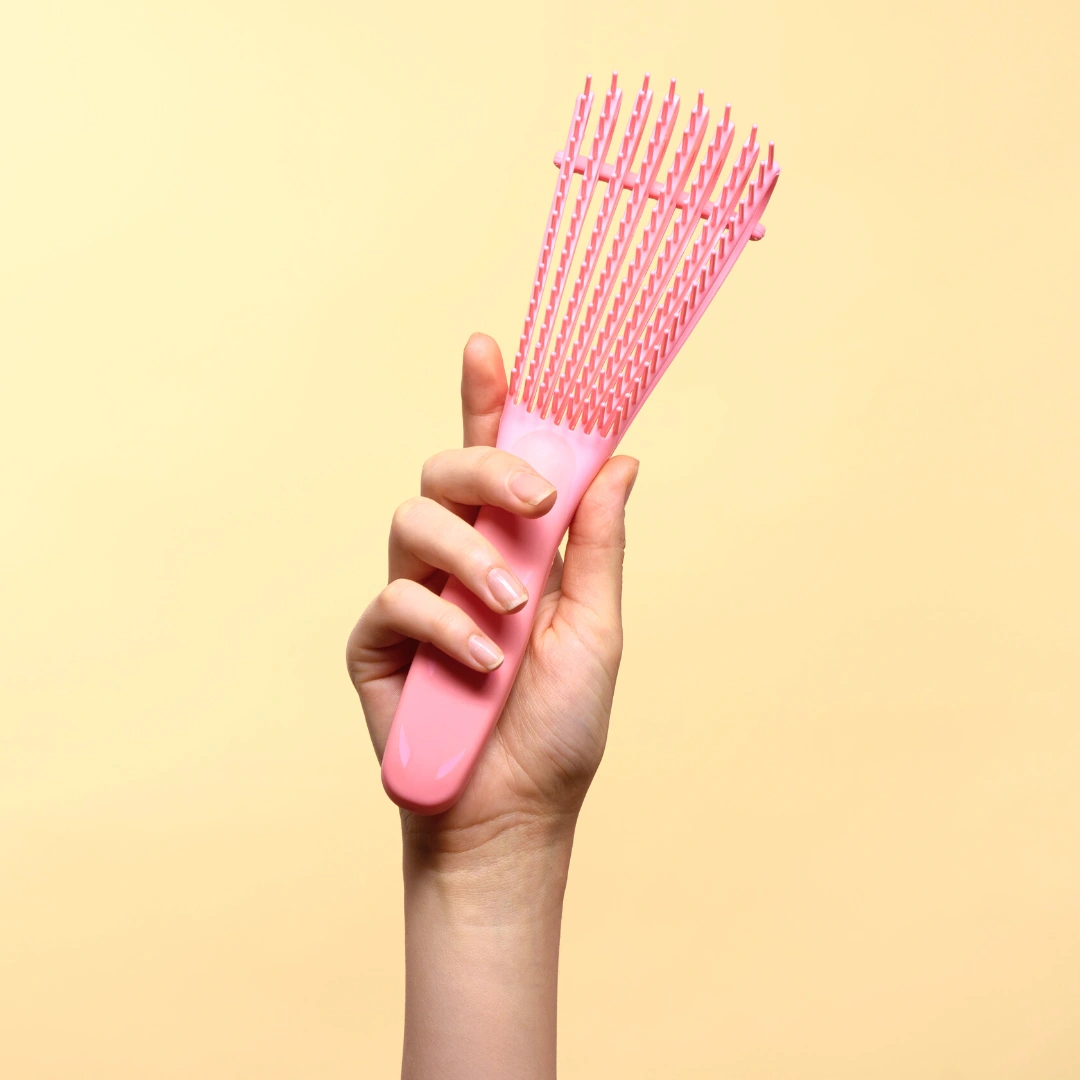
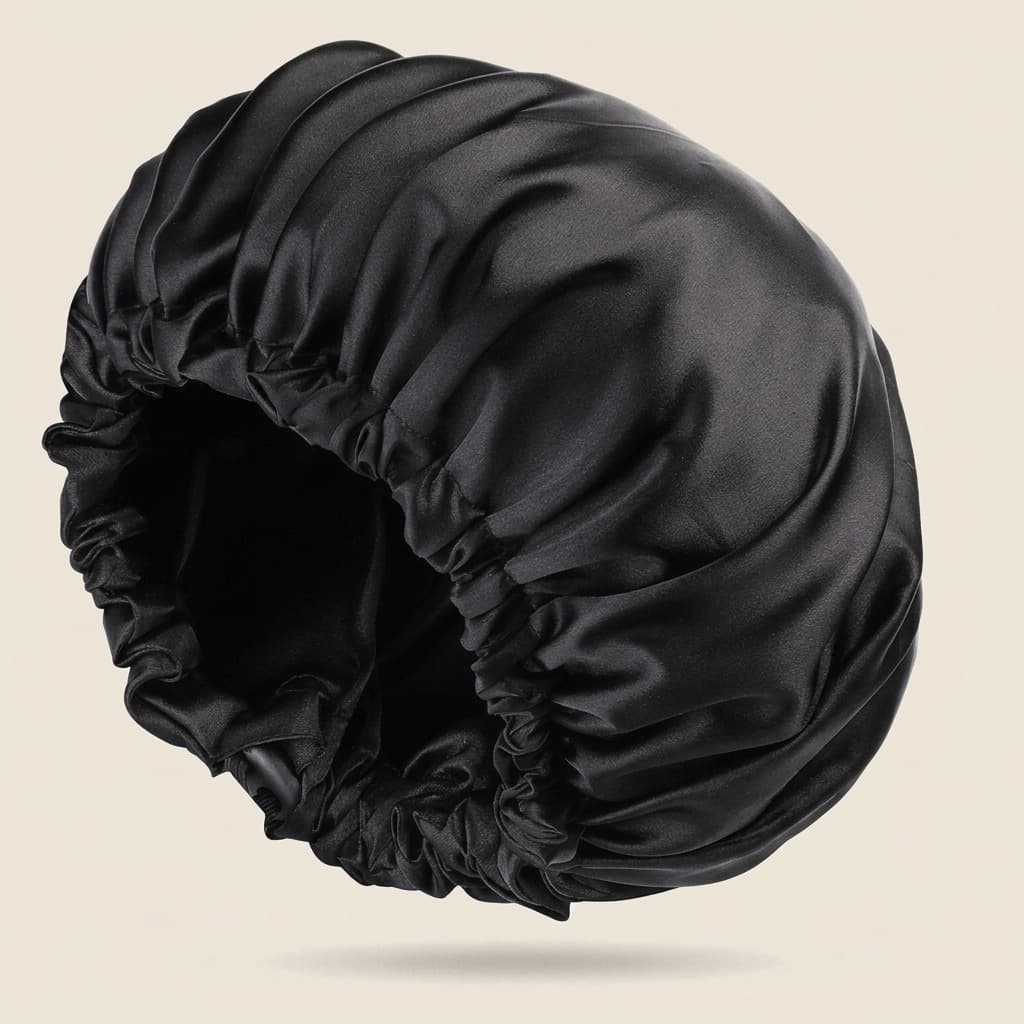
For type 4 hair, a satin sleep bonnet keeps coils from rubbing on cotton overnight, and a wide-tooth detangling comb is a good second tool for bigger sections.
Why your hair type can change
Your type isn't fixed for life. Hormones during puberty, pregnancy and menopause can loosen or tighten your curls. Heat damage and chemical treatments can leave sections that curl looser than your new growth. Even humidity changes how tightly curls clump on a given day.
If your hair looks different from last year, wash it, let it air dry with no product and take the quiz again.
Frequently asked questions
Sources
The 1A to 4C system, the strand descriptions, the object sizes (sidewalk chalk, marker, pencil, crochet needle) and the shrinkage bands come from published hair type charts and hair type quizzes, read October 10, 2026. The review counts and the three quotes are from our own WonderBrush reviews.
Wash, air dry, and take the quiz above. You'll know your type in a minute.